

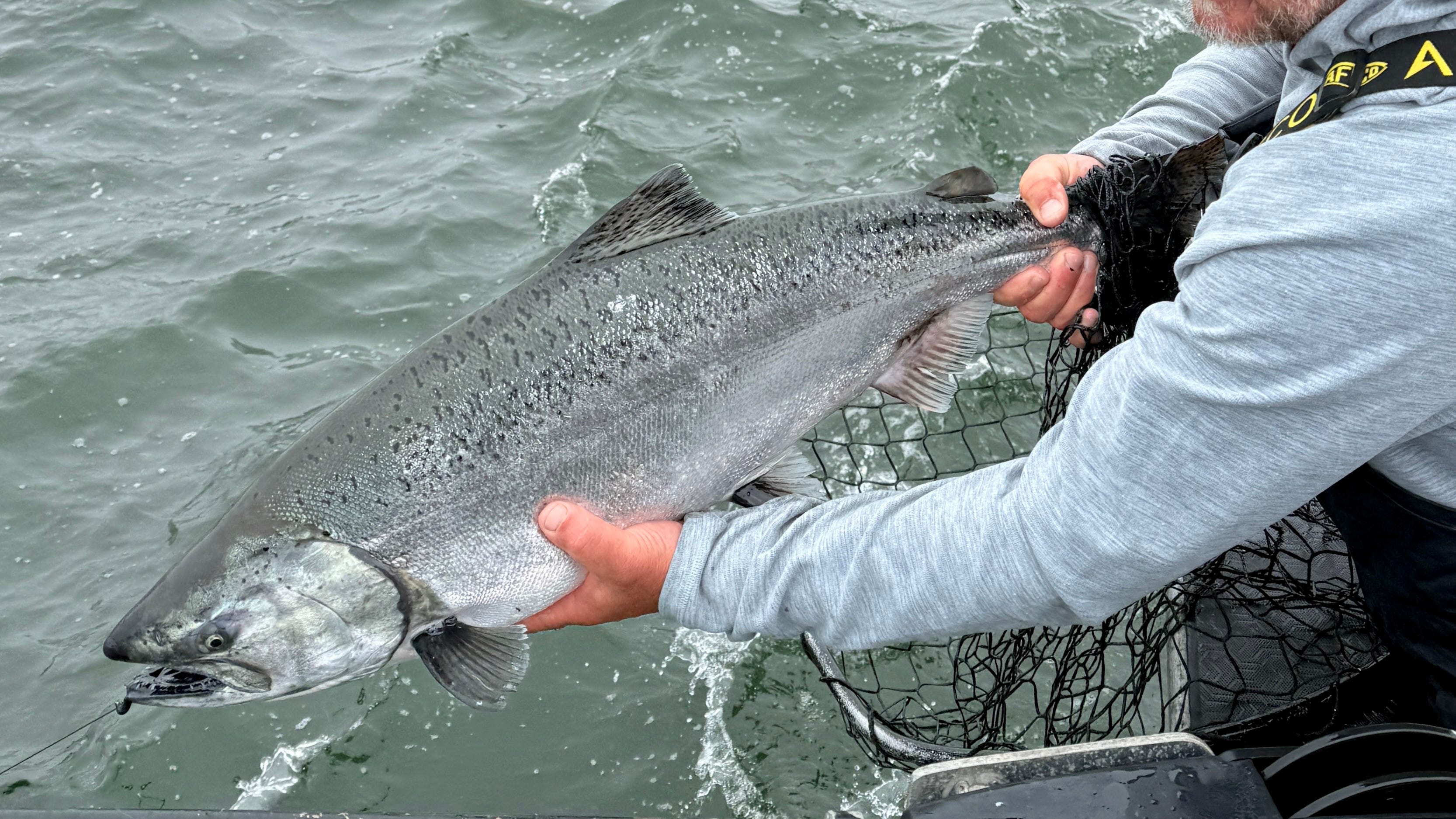
“I'll have the salmon.” I find myself saying this a lot when dining at a restaurant. The unctuousness of fatty salmon draped seductively over a nob of packed sushi rice is tough to resist. Even in peak tuna season here in Montauk, I can’t resist the siren call of salmon. I suppose there are physiological reasons for this. We crave the omega-3 rich, fluorescent-colored flesh. It’s candy to our survival reflex. The human body can’t manufacture omega-3 fatty acids, yet we need them for brain and heart health.
Peek into my kitchen cabinets and you’ll find another great source of fatty acids: sardines. I rarely eat them. I prefer salmon. And I’m not alone. In 2023, each American consumed approximately 3.5 pounds of salmon. We consume more salmon than any other country by twofold. About 70% of it is produced by the aquaculture industry, including virtually 100% of Atlantic salmon because fishing for wild Atlantic salmon has been illegal in US waters since 1948.

Why is this a problem? Two unappetizing words: fish meal. In the wild, salmon eat forage fish such as mackerel, crustaceans and cephalopods. Farmed salmon, however, primarily eat fish meal. Fish meal is manufactured by grinding, cooking and processing oily fishes such as herring and sardines. These fish are caught by commercial trawlers and bottom draggers that scoop up the seafloor along with their target species. The damage done by this sort of fishing is devastating to slow growing flora and fauna that occupy the bottom floor of Planet Ocean. Dragging also releases carbon into the atmosphere thereby contributing to a glut of greenhouse gases (see SOS 025 where I focused on the importance of a healthy seafloor). The environmental concerns don’t stop there. Worldwide, there are approximately 1,400 fish meal factories. More than 16.5 million people live within one mile of one of these factories. The waste products are often disposed of unsafely, polluting local rivers and drinking water. The rancid smell of rotting fish displaces local tourism and can even be carcinogenic. The “fishy” smell of less than fresh seafood comes from a gas called trimethylamine (TMA). In small concentrations, TMA smells “fishy.” In higher concentrations, TMA smells like ammonia. The chemical is linked to cardiovascular damage and potentially contributes to cancer risk among exposed populations.
Aside from the environmental concerns, the fish meal industry is rank with human rights violations. Crews on these ships can consist of forced labor subject to 15-hour shifts, unimaginable sleeping accommodations and perilous working conditions. In Peru, the largest contributor of fish meal raw ingredients, more than a dozen fish meal vessel crew members have died since 2019. The criminal practices of the fish meal industry are the foundation of the farmed salmon market. Without cheap (or forced/free) labor, salmon farm profit margins would be much less appetizing.
Where does that leave the salmon lovers of the world? Wild caught salmon costs two to three times more than farmed salmon. Even if we endeavor to eat only wild caught salmon, there is the real risk of inaccurate labeling by greedy retailers and restaurants. A 2015 study by Oceana found that up to 43% of wild caught salmon sold at US restaurants is actually farm raised. It seems the most conservative approach is abstaining from eating salmon altogether unless you catch it yourself. For most of us, that means never eating salmon again. It’s a harsh reality, but I can live with it. Can you?