

Maine’s Baby Eel Goldrush
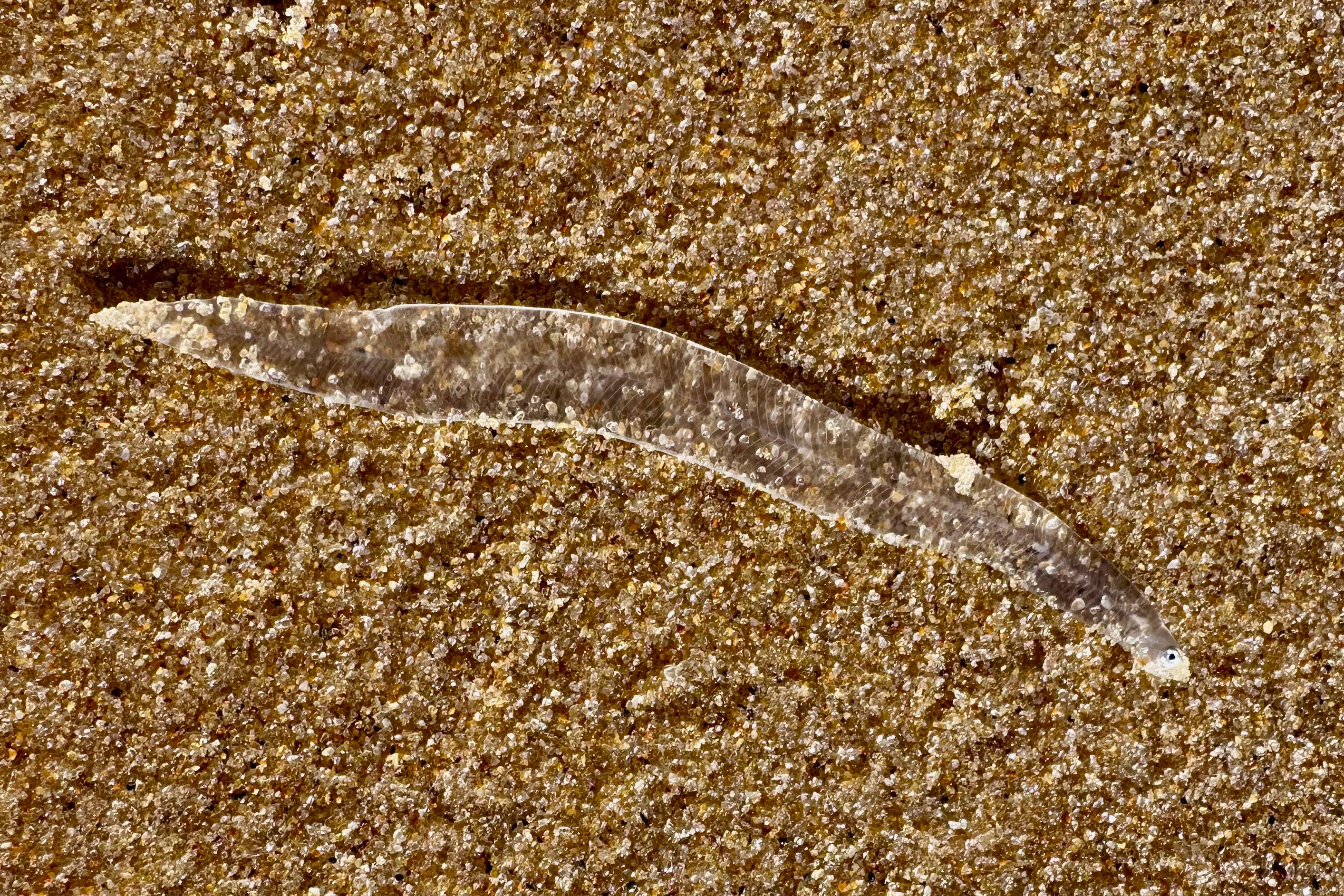
A recent article discusses the upcoming closure of the Maine elver fishery lottery for 20 available (out of 425 total) licenses. WTF are elvers? While the lifecycle of American and European eels isn’t entirely clear, we know they are all born in the Sargasso Sea, a two million square mile area of the North Atlantic, that’s a natural nursery due to an abundance of Sargassum seaweed that forms huge rafts on the surface of the ocean (Sargassum is plentiful in the late summer waters south of Montauk, carried here by the Gulf Stream, and often washes up our beaches when we have a few days of high southerly wind.). After being born, the larval eels ride the Gulf Stream north to New England where they slither swim their way towards the fresh water rivers and streams that will be their home for the next several years. At this stage, they are referred to as glass eels. About three inches long, I find dozens of these adorable larvae stranded on our ocean beaches in early summer. Glass eels are transparent except for a faint hint of a spine and “a couple of chia seeds as eyes,” as described in a comprehensive 2024 New Yorker article about the Maine elver fishery. An elver is the next stage of life for glass eels. Elvers have some pigment and are a bit larger. They are caught using fyke nets strung across Maine’s freshwater streams that capture millions of them. The market value of a pound of elvers ranges from $2000 to $5000 due to the steep decline in population over the last 50 years. This decline has prompted many countries in Europe to heavily regulate the elven fishery. The UK considers eels a critically endangered species and the EU has banned exporting elvers outside their natural range since 2010. Canadian government closed the elver fishery in Nova Scotia and New Brunswick only to re-open it in 2025 after overwhelming backlash from the fishing industry. A total of 425 licenses are available for Maine fisherman looking to participate in the elver goldfish. Selected fisherman can renew their license annually and, when not renewed, licenses are redistributed via lottery. This year, 20 licenses are up for grabs. The value of the licenses is substantial. The average take of an elver fisherman in 2023 for the weeks-long season was ~$46,000 based on a market value of $2,009 per pound. Not gold, but still a healthy haul for the elver lottery winners. Elvers, on the other hand, could use some additional regulatory help.
Right whales and their calves return to Cape Cod Bay
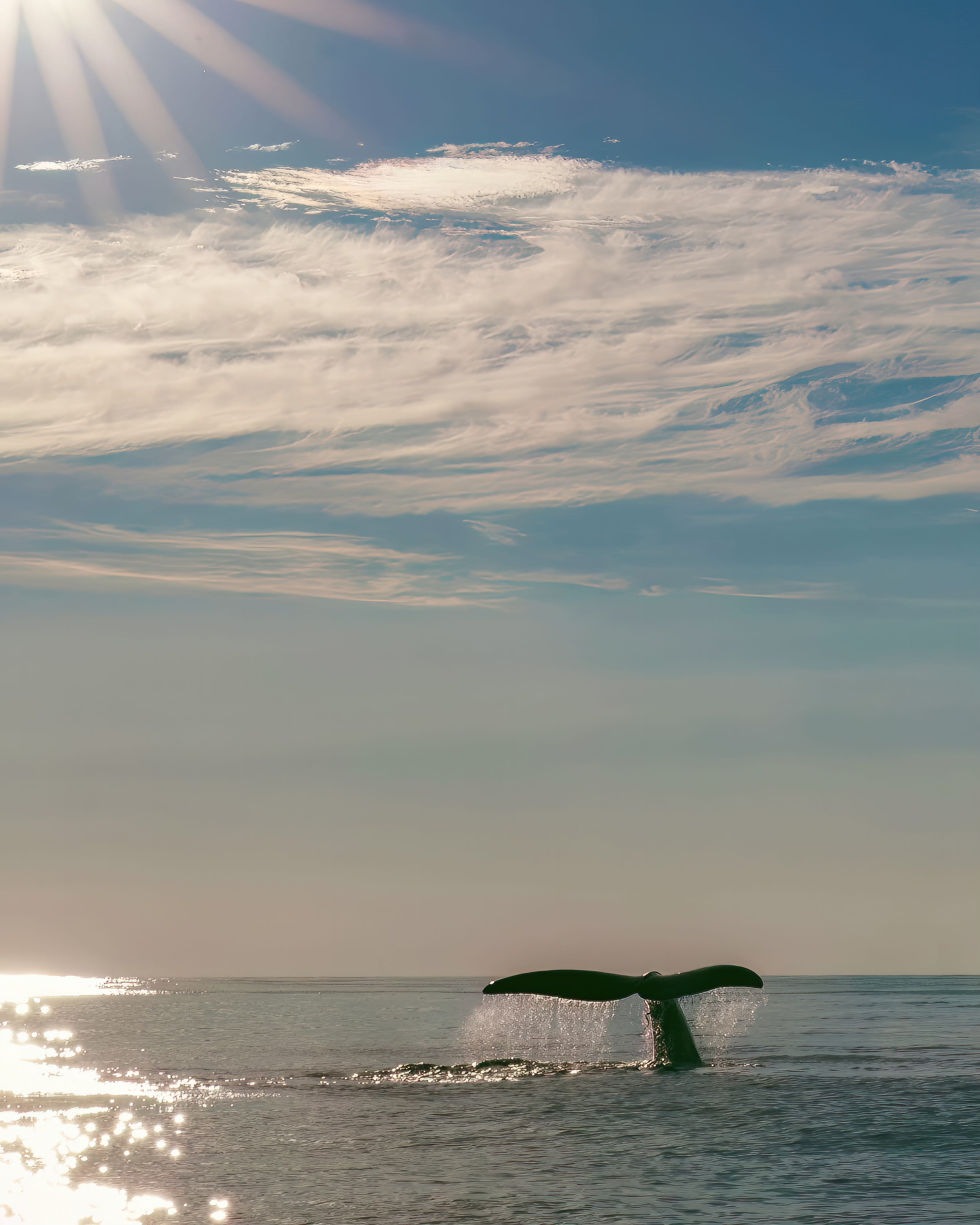
One of my deepest regrets is not having taken drone footage of a dozen or so Northern Atlantic right whales that we spotted on a 2024 tuna trip to Block Canyon. I did snag some photos (above) but an aerial view had epic potential. We were trolling at the time, which makes it very challenging to launch and, especially, land a drone. The boat is moving and stopping the boat with lines out risks disastrous tangling and, worse, time-gobbling detangling. So we didn’t get the footage of one of the rarest animals in the ocean. On March 9th, observers from the Center for Coastal Studies in Provincetown, Massachusetts spotted two mother-calf pairs in Cape Cod Bay. The whales migrate here from their winter grounds off of Georgia and Florida, where calves are born and fed to gain strength needed to swim over 1,000 miles. North Atlantic right whales are critically endangered, with an estimated total population of 384, with 22 newborns recorded as born so far this year. Let’s hope I get another chance to see these beautiful baleens in 2026. This time, I’ll be sure to stop fishing and start filming. It’s important to note that it is illegal to get closer than 500 yards from a right whale. That includes boats, kayaks and, yes, drones. Any video I capture may be from a distance. Stay tuned to my instagram and this substack for developments.
Major UK supermarkets to stop selling mackerel
In an effort to reduce the pressure of overfishing on mackerel stocks, Waitrose supermarkets in the UK have taken the laudable step of refusing to sell mackerel at their stores. Mackerel populations in European waters have dropped to their lowest numbers in more than 20 years, according to a recent article in The Telegraph. All fresh, chilled and frozen mackerel will be removed from Waitrose’s shelves by April 29th. Last year, the International Council for the Exploration of the Sea recommended a 70% reduction in the commercial mackerel catch. The UK, Norway and the Faroe Islands subsequently agreed to reduce the fishery by 48%. Will that be enough to preserve the species?
Ocean Nibbles
Countries worldwide are negotiating rules for deep sea mining but the United States forges ahead in an effort to harvest metals needed for batteries and other electronic products from polymetallic nodules found on the ocean floor at depths of over 10,000 feet. Can you pass me my iPhone?
We know the Moon more intimately than the deep ocean? Why? The floor of the deep ocean measures approximately 129.3 million square miles and exists hundreds of miles from land. Using submersibles and un-piloted remotely operated vehicles (ROVs), scientists have yet to explore 99.999% (!) of what lurks beneath. Who else finds this potential for discovery thrilling?
Raja Ampat is a diving paradise. Raja Ampat is an area of Indonesia near often referred to by divers as the Amazon of the Ocean due to its abundant healthy corals and marine life. I dove there two years ago on an eleven-day live aboard trip. The neon soft corals had me blinking my eyes behind my mask as if I were hallucinating. As a bonus, we got to see melanistic almost completely black manta rays up close at a reef cleaning station. If you dive, stop what you’re doing and add Raja Ampat to your bucket list. You’re welcome.