

The Dark Side of Renewable Energy
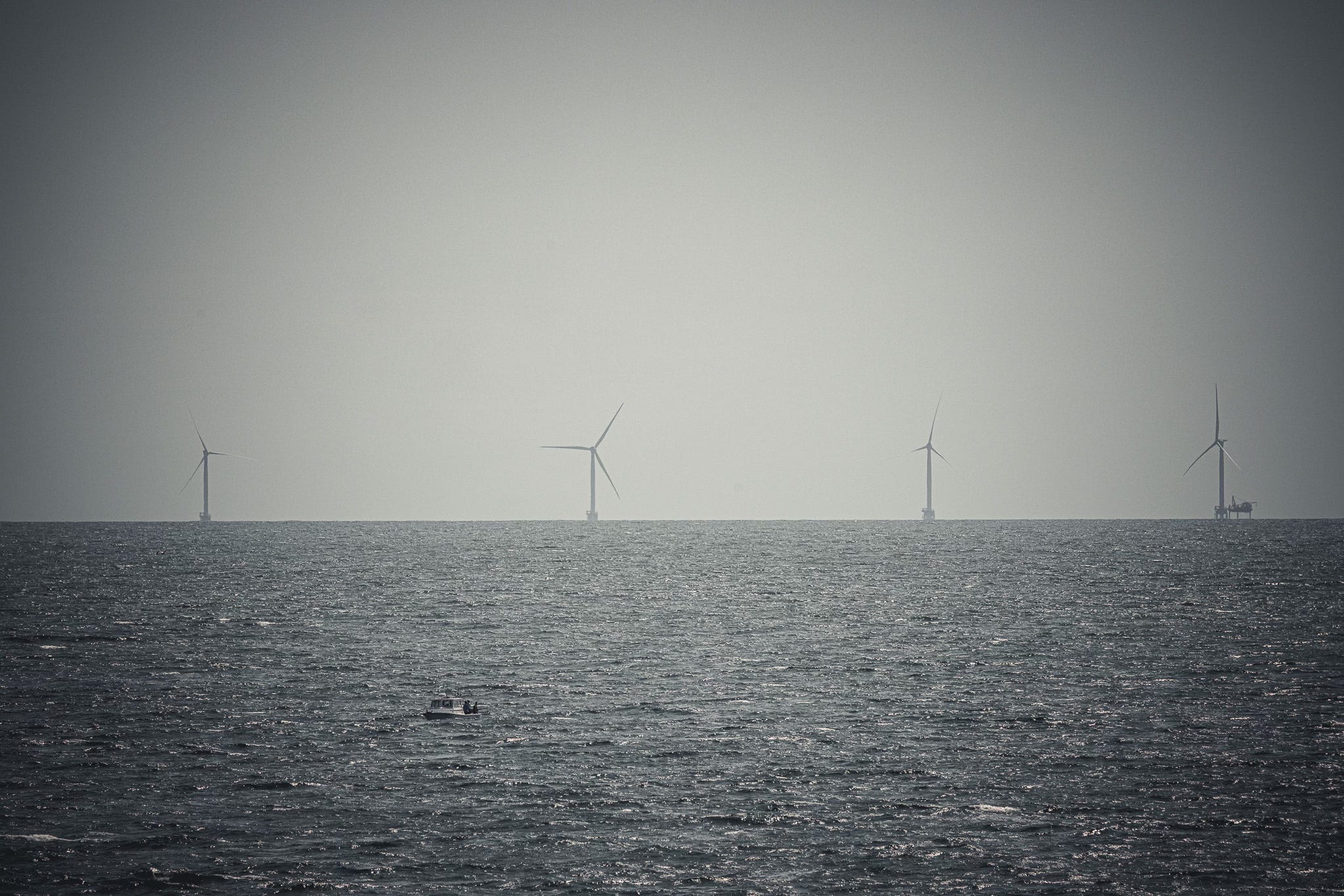
Variability ranks high among the challenges of renewable energy. Coal generators are constant (i.e., non-variable) and reliable. Windmills are not. They require a minimum wind speed, a “cut-in” speed, of 7-9 MPH. The newest tech can work at 5 MPH. But in the summer, when electricity demands are highest, the chance of sub-optimal winds is also highest. This means that stronger winter winds generate surplus power that’s never used. For solar energy, clouds are the real party poopers. Get the picture? Variability is a “riddle wrapped in a mystery, inside an enigma.” Ideally, we would be able to store the electricity for use during lean periods, but current storage technology is not scalable. Giant batteries like Tesla’s “megapacks” offer promise. Manufacturing giant batteries requires hella lithium, cobalt, nickel and manganese. The environmental cost is sub-optimal. Deep sea mining may lead to the extinction of rare ocean flora and fauna. Cobalt mines in the Democratic Republic of the Congo are unregulated disasters. Now, Raja Ampat, a pristine area of Indonesia straddling the Pacific and Indian Oceans is on the chopping block. Nickel miners eager to cash in on the lithium battery demand are vying for the right to exploit nickel deposits in the archipelago. According to reef biologist Mark Erdmann, “[t]here’s nowhere on Earth that has as many fish, corals and everything else packed into one small place.” Having dove Raja in 2024, I take this one personally. Preserving marine habitats is essential. So is weaning ourselves from fossil fuels. What to do?
The Gulf Stream: Here for a Good Time, not a Long Time?
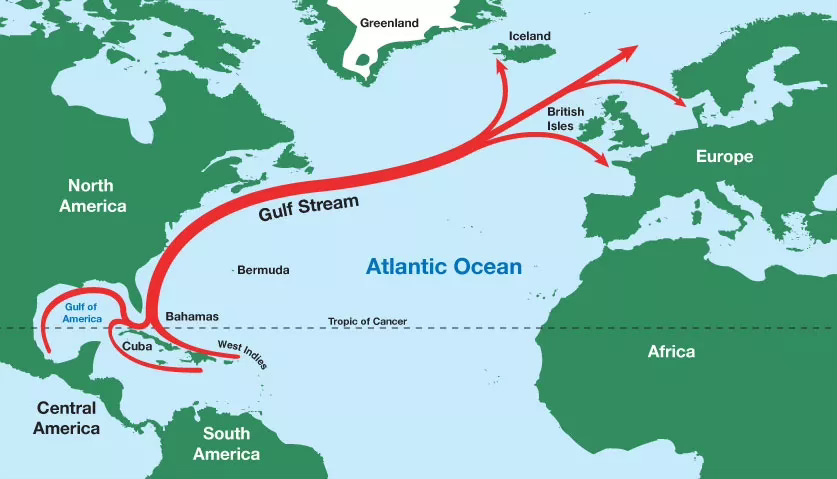
Rudolph Steiner once posited that the heart is not a pump. Rather, our blood is propelled by momentum much like the Gulf Stream is carried northward by a vacuum of cooling seawater in the arctic. Near Greenland, rapidly cooling water gathers momentum as it sinks. That momentum effectively pulls the Gulf Stream along on its journey from its origin in the Gulf of Mexico to its terminus in northern Europe. We should all love the Gulf Stream. It’s the reason that pelagic species like tuna, marlin and mahi mahi visit the northwestern Atlantic during summer. These large ocean predators are attracted by baitfish who, in turn, are attracted by the plankton-rich tropical waters carried north by the heroic current. But what if the Gulf Stream stopped, well, streaming? What if dense fresh water from glacier melt slowed the momentum to a crawl? The Gulf Stream is an essential part of the Atlantic Meridional Overturning Circulation (AMOC) that circulates seawater from the antarctic to the arctic. Cooling water captures carbon, sinking it to the ocean floor and thus preventing it from escaping into the atmosphere as carbon dioxide. According to Johan Rockström, director of the Potsdam Institute for Climate Impact Research, “[t]he ocean has been our greatest ally, absorbing a quarter of human–made CO2 emissions.” If the Gulf Stream ceases, this “overturning” circulation ceases. The result would be a massive increase in atmospheric carbon dioxide with disastrous results for glaciers and hotter, less stable weather in the southern hemisphere. Globally, sea levels would rise considerably. Enjoy Miami while you still can.
Humpbacks Be Humpin’
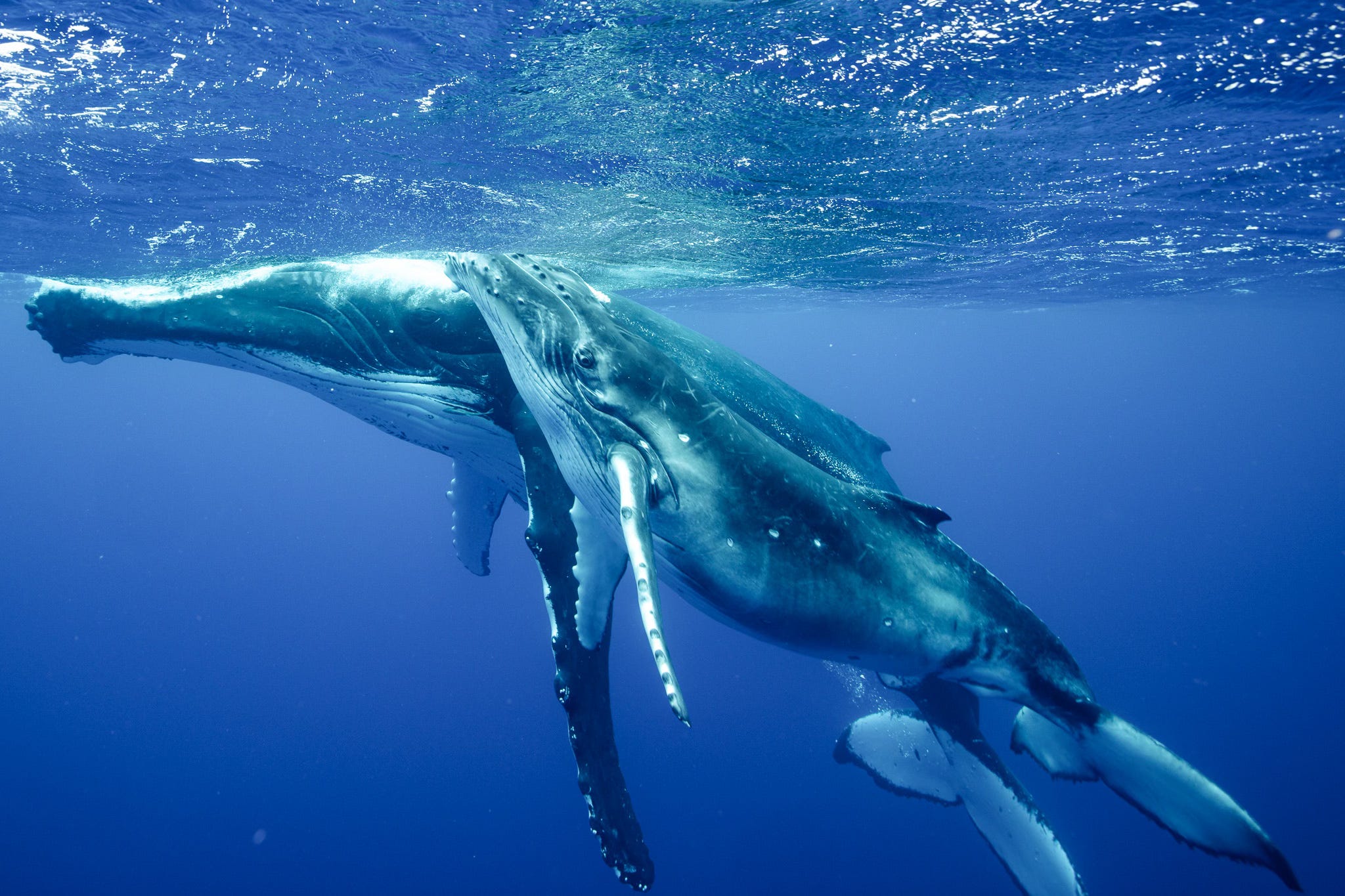
A record number of 513 humpback whales was observed by researchers aboard the super-yacht/research vessel M/Y Solace while on an expedition at the Navidad Bank, a shallow reef ~62 miles off of the Dominican Republic. Humpback whales are a success story, growing from a pre-whaling ban population of about 10,000 to a current estimated population of 135,000. Based on the unprecedented number of whales sighted by the Solace, the species’ rebound continues. The Navidad Bank is known to be one of the world’s most productive breeding grounds, but seeing 513 humpbacks in a single day must have been awe-inspiring for the scientists from the Fundación Puntacana and Fundación Dominicana de Estudios Marinos/FUNDEMAR. And I thought seeing a half dozen whales from a beach in Montauk was special…
Ocean Nibbles

What won’t a golden retriever retrieve? Apparently, not much. An unfortunate golden in England recently swallowed a fishing lure and needed a visit the vet to have two treble hooks removed from his mouth and nose. I feel lucky that George (see photo above) only chases ducks!
20 Years of Data Reveal Shifting Patterns for Maine Marine Life. The study aims to track populations of economically important animals such as lobster, herring and shrimp. Along with less diversity among fishery-relevant species, the study found that many fish species are moving deeper and further northeast.
Sea Shepherd Founder in Hot Water…Again. In 2024, Paul Watson was held for 5 months in a Greenland prison while awaiting extradition to Japan for charges stemming from an encounter with a Japanese whaling boat in the Antarctic. He was subsequently cleared of charges and released. Without skipping a beat, Capt. Watson was back at it. This time, one of his ships bumped a krill fishing vessel near the Antarctic peninsula in an effort to disrupt the large-scale krill kill.
The Wish List
The all new Pursuit S 388 Sport is my latest infatuation. Triple Yamaha 450s and a 500 gallon fuel tank give you the speed and range to fish the farthest canyons. Even at a top speed of 59 MPH, the boat has a range of 229 miles! At a more reasonable 30 MPH, you can sail 352 miles without re-fueling. I just pinned a photo of the S388 to my vision board. Manifest away, universe.
George also eats grapes, but just the one time