


Rice’s Whales and the “God Squad”
Rice whales are a critically endangered species of baleen whale that live their entire lives in the Gulf of Mexico. Identified as a unique species in 2021, there remain only 51 individuals on planet ocean. All 51 of them live in the northeast part of the Gulf of Mexico. Know what else happens in the northeast part of the Gulf of Mexico? Fifteen percent of America’s crude oil production. Enter the “God Squad.” Officially known as the Endangered Species Committee, the “squad” consists of 6 high-level feds who decide whether to grant exemption to endangered species protections. For critically endangered species like the rice whales, the “God Squad” is a savior or an executioner. This past Tuesday, the “squad” voted to exempt oil drilling companies from adhering to protections for the Rice’s whale. At the brief meeting, Secretary of Defense err Death oops War Pete Hegseth stated that removing Endangered Species Act protections for the Rice’s whales “is a critical matter of national security.” Because, drill baby drill. Right?
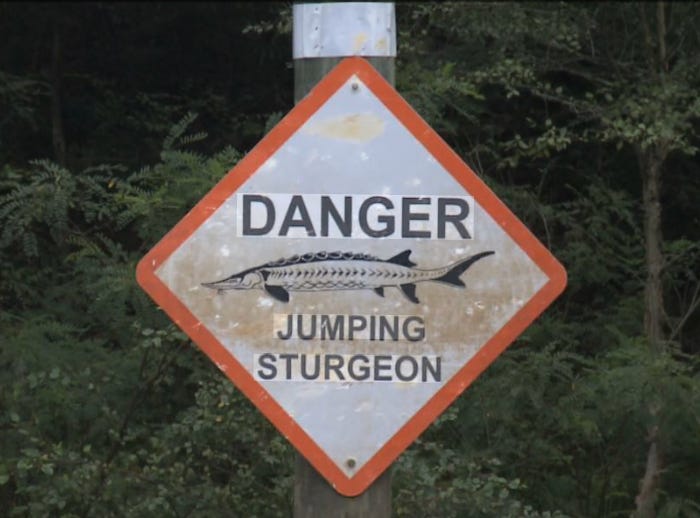
Atlantic Sturgeon Make a Comeback
Sometimes referred to as a living fossil, sturgeon look like bluefish donning body armor, but larger. Much larger. Atlantic sturgeon measure up to 14 feet in length and weigh up to 800 pounds! With fossil records dated from 160-200 million years ago, these babes once swam in oceans patrolled by pterodactyls. Indigenous people prized sturgeon for their meat and their roe a/k/a caviar. When British settlers landed in Jamestown in 1607, Atlantic sturgeon were the primary food source that kept John Smith and friends alive. The “Black Gold Rush” of the late 1800s ushered in a period of overfishing that culminated in a 1998 moratorium by the Atlantic States Marine Fisheries Commission. 7,000,000 pounds of Atlantic sturgeon were caught in 1887. By 1905, the total catch decreased to 20,000 pounds. By 1989, it was 500 pounds. The fishing moratorium that began in 1998 can be credited with preserving the species. Commercial bycatch remains an impediment to restoring the sturgeon population on the eastern seaboard, but restocking efforts are slowly tipping the scales in their favor. Other efforts such as dam removal and fish ladder installation are also helping. Like salmon, sturgeon are anadromous. They spawn in a fresh water river, migrate to the ocean, then return to the same river to lay their eggs. Dams made reproduction nearly impossible in rivers like the Connecticut river. Today, Atlantic sturgeon numbers in the Connecticut and Hudson rivers are on a gradual upswing. How can you help? By reporting any sightings, alive or dead, to NOAA here.
New “Roadmap” of the Ocean Floor
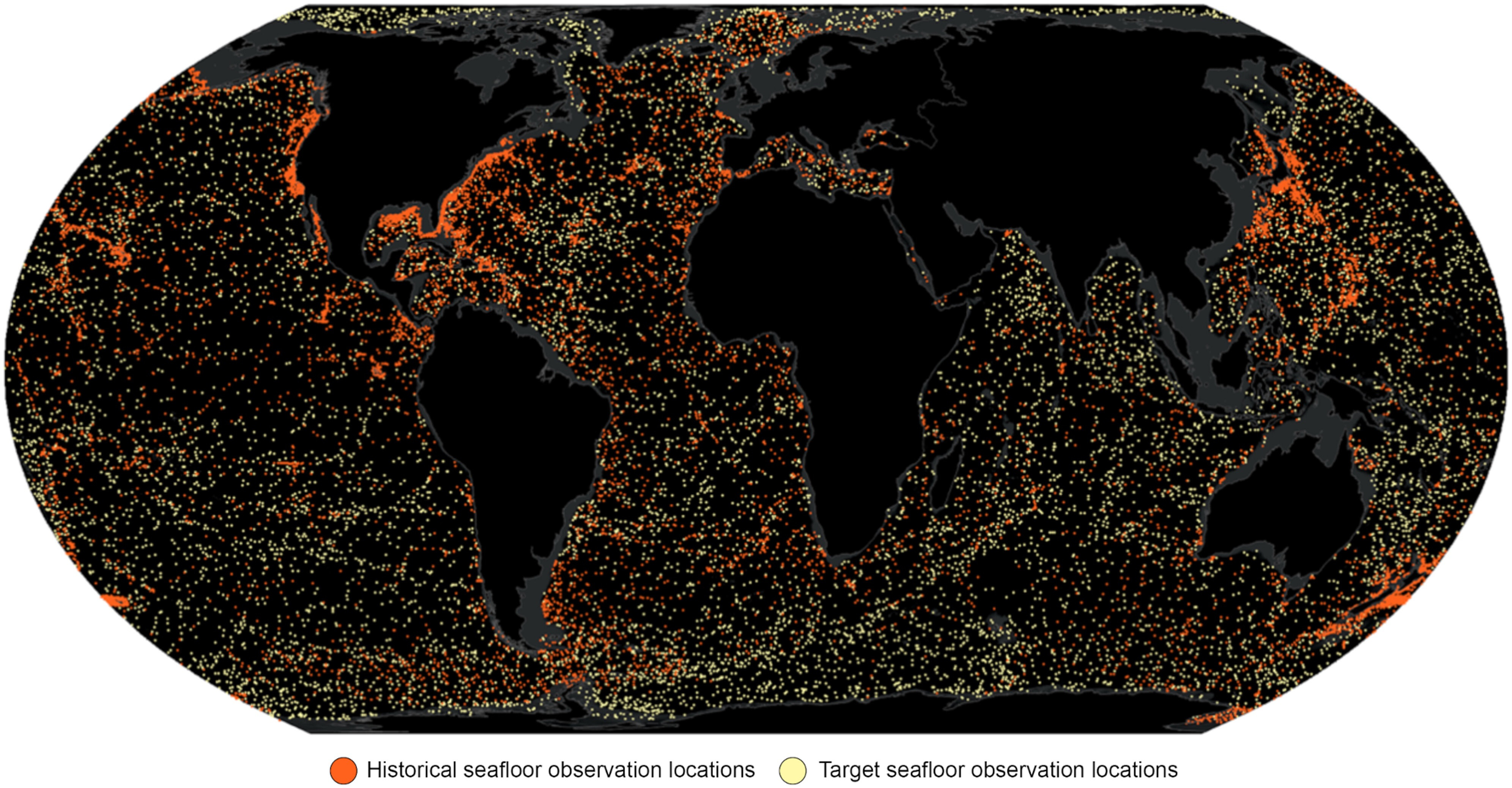
On Wednesday, the Ocean Discovery League founded by National Geographic Explorer Katy Croff Bell released an interactive map highlighting 10,000 “target spots” in water deeper than 650 feet. The goal of the map is to increase public awareness of the unexplored nature of the deep sea, as well as to encourage exploration by researchers. Only by knowing the deep ocean’s flora and fauna can we effectively preserve their habitat while also allowing for resource exploration. Due to the extreme environment, researchers will need new technology. The Ocean Discovery League has a solution called the Deep Ocean Research & Imaging System (DORIS). DORIS is an untethered, unmanned submersible with a relatively low $10,000 price tag designed to simplify exploration without specialized engineering expertise. Other programs aimed at exploring the ocean floor include the Argo Program, Seabed 2030, Ocean Census and Challenger 150. The Argo Program uses “a fleet of robotic instruments that drift with the ocean currents” to collect data. Seabed 2030 is “a global community working with partners across industry, governments, research, philanthropy, NGOs, and civil society” whose goal is a complete map of the entire global seabed. Ocean Census aims to discover and catalogue all ocean life “using advanced technology, international collaboration, and open-access data sharing.” Challenger 150 “provides an umbrella, under which individual research projects can operate, and in doing so contribute to a global research effort coordinated towards a set of common objectives and standards.” For ocean lovers like you and me, isn’t this the best time to be alive?
Ocean Nibbles
Double-Crested Cormorants Return to Montauk. This past week, I noticed several cormorants perched on the inlet markers. Only until I began living out here full time did I realize that cormorants migrate away from our area in the winter. Smarter than humans?
Bait Heist Captured on Camera. The culprits? A den of thieves consisting of an otter and a heron caught on a wildlife camera by their victim, a commercial fisherman in Northumberland, England, who noticed bait missing overnight from his fish box!
Canned Seafood is the New Caviar. Spaniards have long prized seafood like mussels and octopus seasoned and stuffed into small tins. Now, so can you. Check out online gourmet retailers like Caputo’s and Fishwife. My favorite products include The Spicy Trio by Fishwife that bundles Fly By Jing Sichuan Chili Crisp Smoked Salmon, Slow Smoked Mackerel with Chili Flakes, and Sardines with Hot Pepper. Deeelish!
SOS Wish List
Avet Reels make it feel like cheating when hooked into a 100+ pound bluefin tuna. The ergonomic handles and gearing are unparalleled IMHO. I’d spend a paycheck or three on one of these technical dreams. HBU?