

"things whirl / In the chainsaw bite of whatever squares the universe by name and number" - Robert Lowell, Notebooks 1967-1968
We categorize and sub-categorize. Constantly. We divide what appears whole into smaller and smaller bites until we no longer recognize the whole. The sky is not the sky but a collection of stars. The ocean is not one body of water but four distinct oceans. It’s the illusion of knowledge. Above all, humans want to know. But zoom out and those distinctions no longer hold. Continents appear connected. Nations integrate. Our blue and green marble is bereft of boundaries. Everything is connected. And that scares us. Because knowledge is control. Control is safety. Controlling our environment makes us feel safe. But is it ours? What of the numberless life forms that call the ocean home? Until we consider their plight as tied to our own, we will find no solace in endless categorization. The extinction of a species erodes our own existence. Which is why I write Save the Ocean Series. To bring awareness to our impact as stewards of our environment. We may not have asked for such a weighty responsibility, yet it is ours alone. We must speak for the voiceless. We must consider their destiny our own.
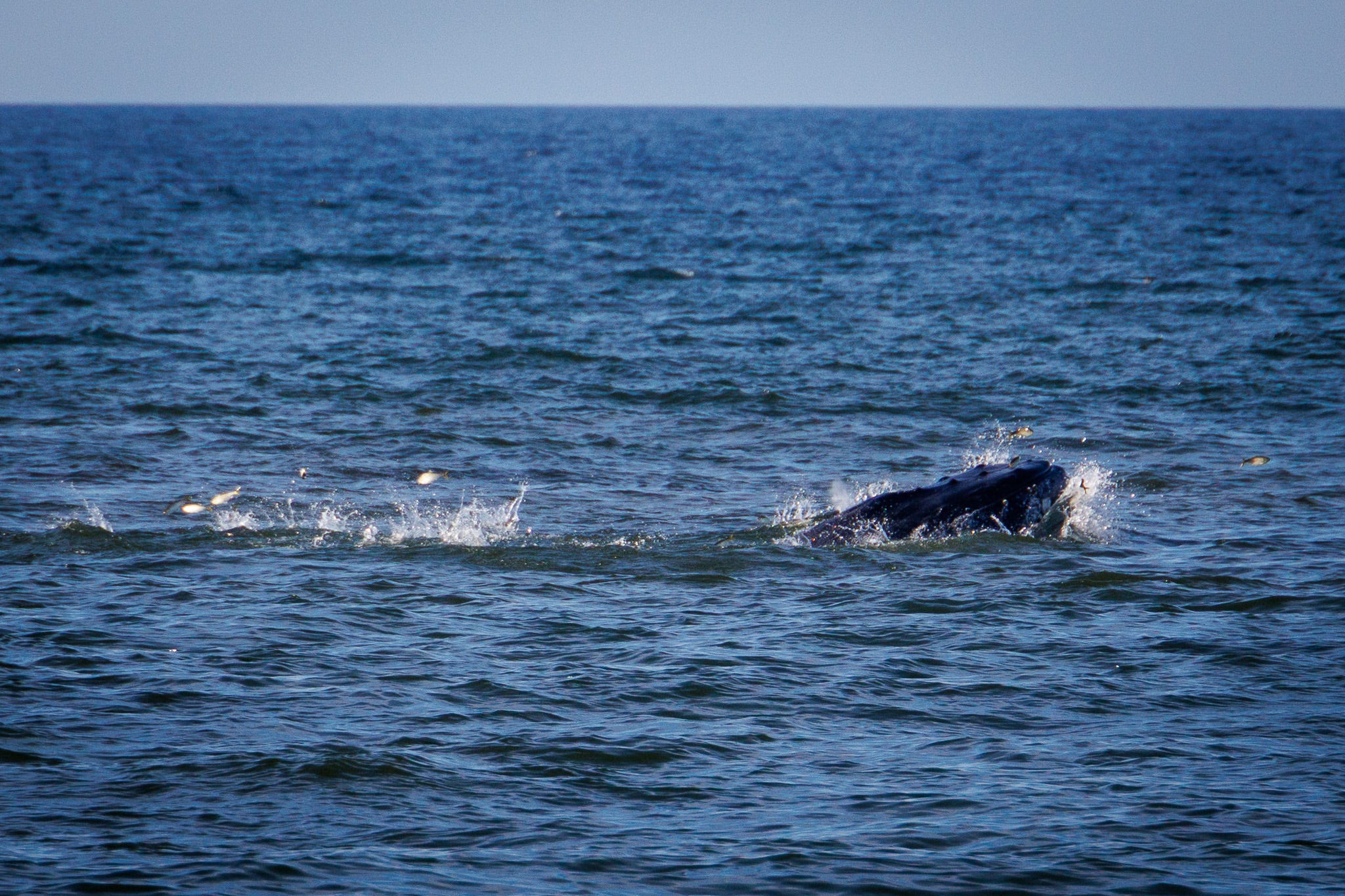
This week’s vote on menhaden quotas
This week, the Atlantic States Marine Fisheries Commission (ASMFC) votes on whether to reduce the commercial fishing quota for menhaden, a critical food source for osprey hawks, juvenile humpback whales, dolphins, tuna, striped bass and bluefish. Menhaden are one of those fish that has a geographically variable name. If you live in New England, you call them “pogies.” If you live in New York, you call them “bunker.” We’re accustomed to the ubiquity of vast menhaden schools along our summer beaches. Lounging on hot sand in August, they appear as a dark brown patch of water peppered with tiny splashes. As filter feeders, they also clean our water. Menhaden swim along with mouths agape to feed on swarms of plankton. As juveniles, their diet consists entirely of the phytoplankton that blooms near the surface during warmer months. As they age, adult menhaden prefer the direct protein source provided by zooplankton. Menhaden live up to twelve years. A twelve-year old menhaden can measure eighteen inches and weigh two pounds.
On Tuesday, the ASMFC will decide whether to lower the quota in the Chesapeake Bay region by up to fifty percent. The main driving factors for reducing the quota are historically low osprey birth rates and reduced populations of local game fish like striped bass. Chesapeake Bay ospreys had their “worst breeding season on record,” with only a 19% success rate for nesting pairs. Researchers are finding nests filled with dead osprey chicks. The apparent cause is a dearth of food, i.e. menhaden. Omega Protein, the monopolistic harvester of Atlantic menhaden, is pushing back by arguing that the ASMFC “has not classified menhaden as overfished by the commission’s own measure and that no study has established a link between starving osprey chicks and the commercial catch.” But the above-mentioned observational data shows evidence to the contrary. Public comments to the proposed quota decrease are now closed. Let’s hope the ASMFC does the right thing to protect a species that enables the survival of so many other species whether sea or sky dwellers.