

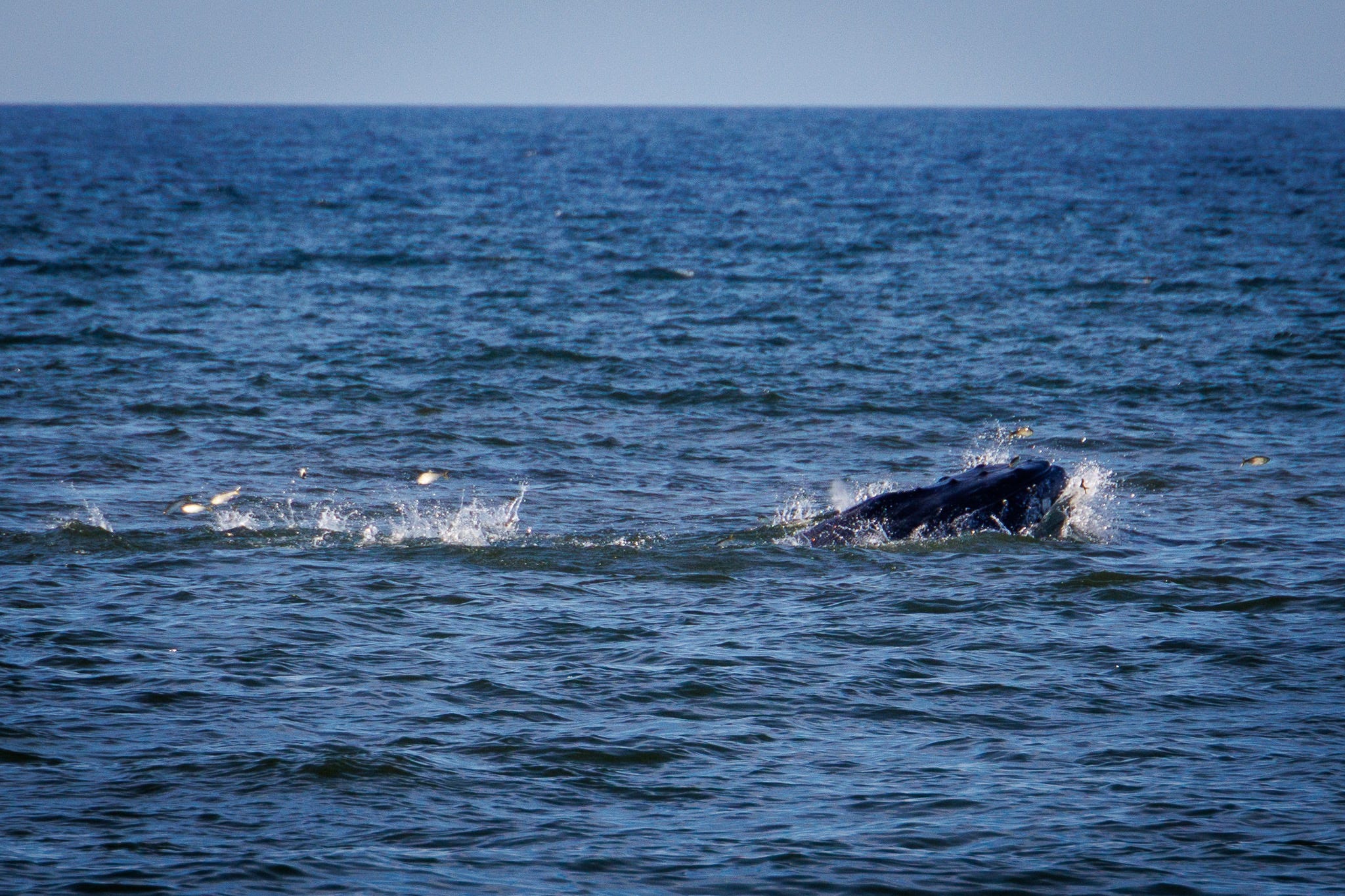
The most important fish in the sea
I own a book by that title. Written by H. Bruce Franklin, the dense volume provides everything you need to know about menhaden. I must admit I haven’t read the entire book. It’s dense, remember? But I managed to glean some key facts. Menhaden feed by filtering plankton from the water. Incidentally, they clean the ocean. The affect of such filtration is visible from a drone. The water clarity improves dramatically in the wake of a big school of menhaden. Menhaden are an integral part of the food chain, critical to the survival of species like striped bass and ospreys. This year’s over harvesting of menhaden resulted in an osprey die off in the Chesapeake Bay. Even the juvenile humpback whales that visited our beaches in late summer this year rely on menhaden as a primary food source. Each time a whale lunge feeds, it consumes hundreds of menhaden. Always an impressive sight from the beach and from the sky via my drone. Menhaden are rich in Omega-3 fatty acids. In fact, menhaden’s leading cause of death is a fleet of factory ships operated by a company called Omega Protein. From the 437,000 metric tons of menhaden it harvests annually, Omega Protein produces Omega-3 supplements, protein supplements, animal feed, and crop fertilizer. The Atlantic States Marine Fisheries Commission (ASMFC) is charged with regulating menhaden catches. Each year, ASMFC sets a commercial quota. Part of that quota is the Chesapeake Bay reduction fishery cap, which has been 51,000 metric tons annually since 2018. ASFMC is currently seeking public comments as it contemplates lowering the cap by up to 50%. Please make your opinions known by submitting a comment here.
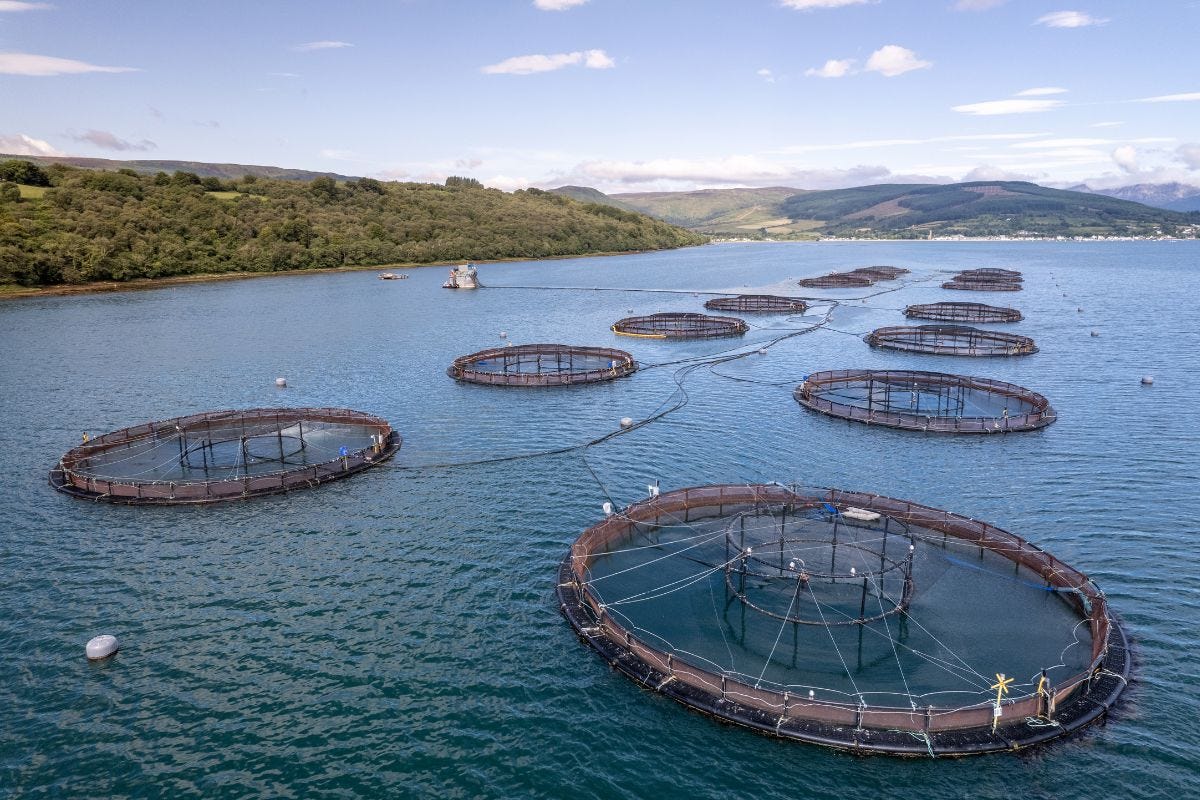
The aquaculture conundrum
At least 62% of the fish we eat in the United States is imported. Why? Because 35% of fish are being harvested unsustainably. A meal consisting of wild-caught fish is thus illusory. A thing of the past. The stuff of nostalgia. To meet the increasing domestic demand for seafood, we import our fish from foreign aquaculture operations because no commercial scale finfish farms exist in the US. Fish farming is growing exponentially, just not here. We rank 20th in worldwide aquaculture production. Countries like China, India and Indonesia are leaving us in their wake. Our current seafood trade deficit is greater than $20 billion. The biggest obstacle preventing America from providing its own sustainable catch in the form of farmed fish is a prohibitory regulatory framework. Congress is currently considering a forward-thinking approach to fish farming pursuant to the Marine Aquaculture Research for America Act (MARAA). MARAA aims to establish a test program for marine aquaculture operations that will gather research to develop an environmentally responsible fish farm industry in domestic waters. Support for MARAA includes an unlikely partnership between the Environmental Defense Fund and the seafood industry. Both parties support MARAA’s potential benefits such as reducing pressure on wild stocks, low-carbon operations and new investment in port infrastructure and seafood processing.
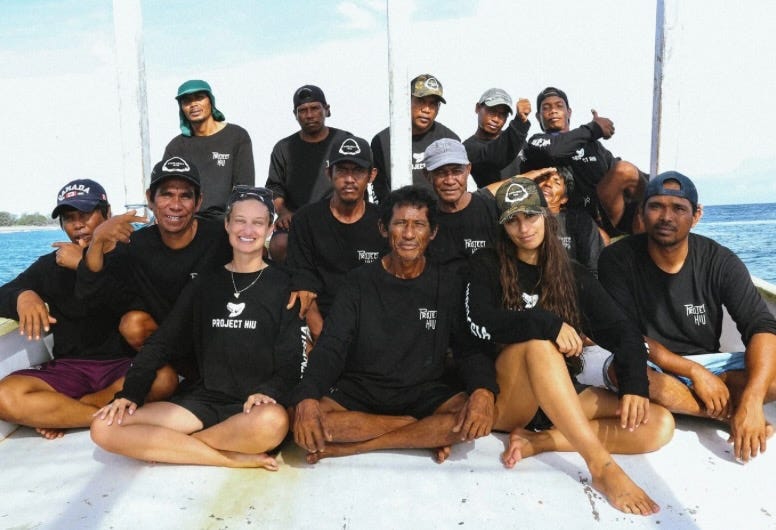
Turning poachers into ecotourism guides
It turns out illegal fisherman make excellent guides for tourists who want to observe endangered species. My wife and I can attest to this. When we visited Mexico’s Revillagigedo Archipelago on a dive trip, the captain of the liveaboard was a former tuna fisherman who used to make money exploiting the now-protected marine area. When we swam with humpback whales in Vava’u, Tonga, the boat captain was a former whaler. The skills of these former hunters and, perhaps, sometimes poachers have been repurposed to guarantee tourists like us get to see some of the most pristine underwater environments on Planet Ocean. These conversions are happening all over the world. Project Hiu, founded by Australian shark conservationist Madison Stewart, hires former shark fisherman who frequently flaunted Indonesian shark regulations as guides for tourists who want to snorkel with local blacktip sharks. With a fleet of 15 boats, the project already has about 80 guides pulled from the ranks of shark fisherman. The work of Project Hiu is not limited to tourist operations. The local guides also tag and provide valuable research about the sharks they used to kill.