

In law school, I took a course called the Law of the Sea. How romantic, I thought. Leave it to me to find an ocean-related curriculum among the driest of course titles: Securities Law, Corporate Law, Real Property. Still, this was law school and most of maritime law involves disputes related to freight companies and international boundaries. However, the course did include a subject that fascinated me. The International Whaling Convention (IWC). For the few weeks we studied the IWC, I sat rapt as the professor spoke of the 1985 moratorium on commercial whaling. By 1986, whales were in dire need of saving after centuries of commercial exploitation. The “Save the Whales” movement of the mid-1970s had finally come to fruition.
The IWC bans commercial whaling but has an exemption for aboriginal subsistence hunting. This tracks because there are aboriginal communities, even in the US, that consider whale meat a staple of their diet. The number of whales taken by such communities is sustainable. Commercial whaling is not. Three countries, however, continue to kill whales commercially: Iceland, Norway and Japan. Norway never agreed to the IWC, Japan left the IWC in 2019 and Iceland left the IWC in 1992 then rejoined in 2002 but continues to object to the commercial moratorium. All three countries are required to report whale catches to the IWC.
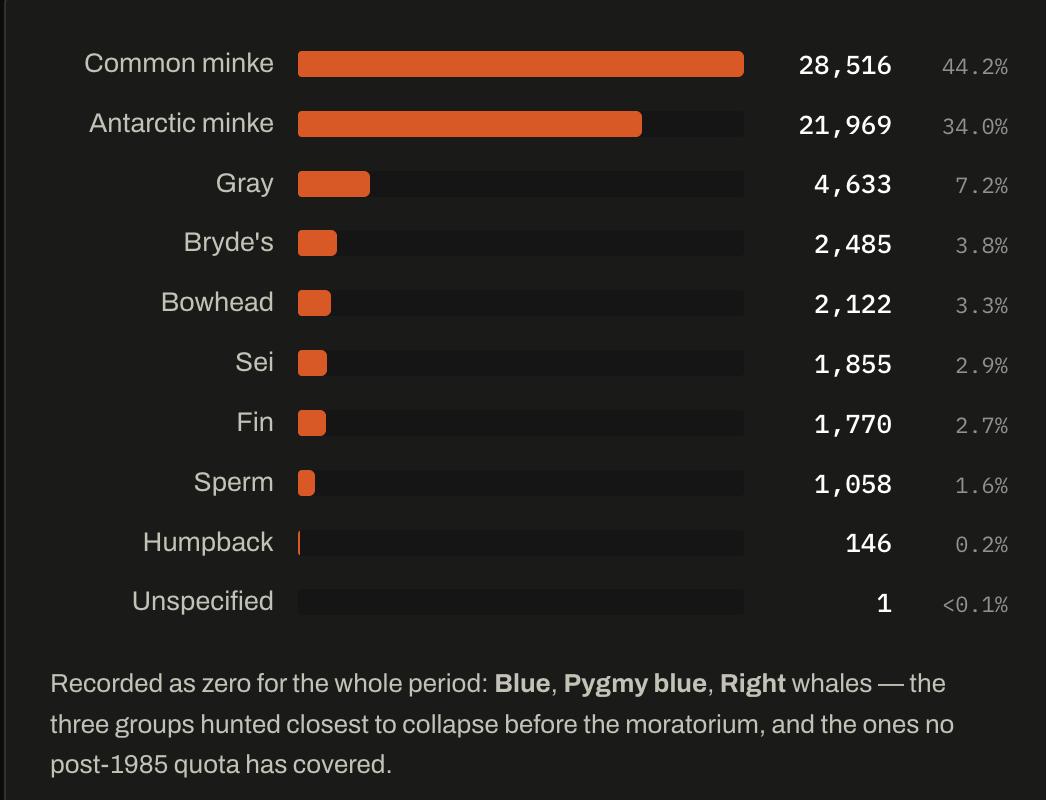
The whale kill data from Iceland, Japan and Norway is available on the IWC’s site. Since 1985, Iceland has killed 2,049 whales, including fin, sei and common minke whales. Japan has killed 24,908 whales, including fin, sperm, sei, Bryde’s, common minke and Antarctic minke whales. Norway has killed 17,338 minke whales and 1 Antarctic minke whale. I find these numbers staggering. I’m not sure many people know just how many whales continue to be killed despite the purported ban on whaling. For more detail, you can check out the interactive data analysis I created using IWC data here.
What is being done to end commercial whaling for good? Four major organizations focus on eliminating whaling carried out for commercial purposes. Greenpeace started the “Save the Whales” campaign in the 1970s and continues to oppose whaling using non-violent political action, public education, and political lobbying at the IWC. The Sea Shepherd Conservation Society, founded by former Greenpeace member Paul Watson, uses aggressive tactics at sea. Sea Shepherd vessels will physically block whaling vessels, putting their crews’ lives at stake in the fight against whaling. The Captain Paul Watson Foundation (CPWF) was founded by Watson to continue the work of Sea Shepherd after he was voted out of the Sea Shepherd board of directors. CPWF uses even more aggressive tactics than Sea Shepherd. The World Cetacean Alliance focuses on policy, ending marine mammal captivity, extinguishing demand for whale meat and exposing the cruelty of current whale hunting methods.
You can help these anti-whaling organizations by getting involved in their work and/or making a donation at the following links:
Donate to the Sea Shepherd Conservation Society
Donate to the Captain Paul Watson Foundation
Donate to the World Cetacean Alliance
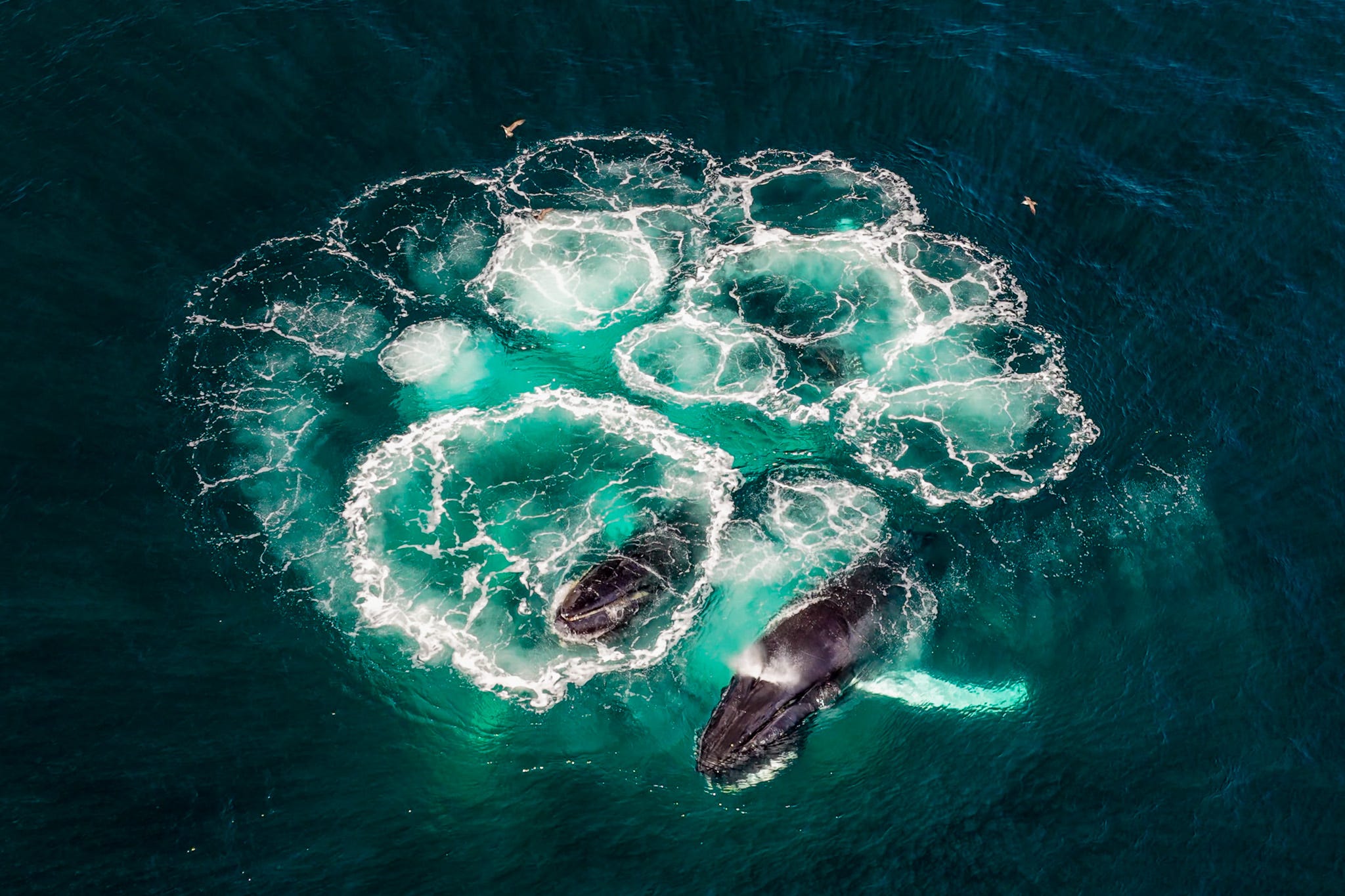
The whales still need our help despite the work of the IWC. In the past week, I've been filming humpback and common minke whales along the beaches in Montauk. The view through the monitor of my drone’s remote controller is nothing short of intimate. I watch these whale as they breath, dive and feed. Feeling as connected as I do to such beautiful animals, I’m asking all of you to join me in protecting them permanently. Thank you for reading this article. Reach out if you have any questions about how to get involved.