

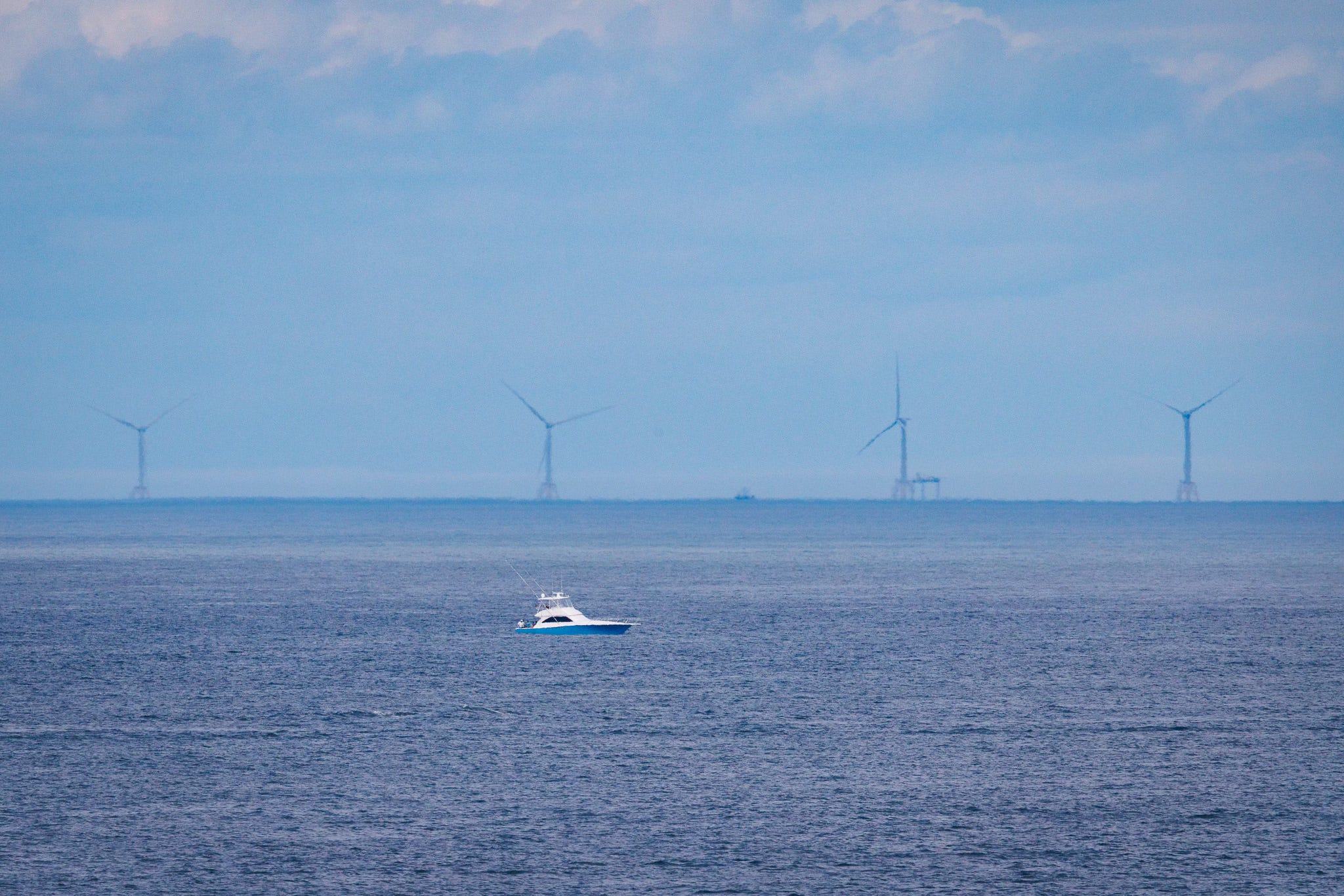
Some of the things we know we just can’t prove. Not on our own, any way. Not without the proper instruments, expensive instruments. So we go on knowing without having the proof to back up that knowledge. One thing we know is that loud noises affect animals. Think of your dog cowering beneath the bed when he hears an approaching thunderstorm. Think of a horse that bolts upon hearing the sudden boom of gunfire. Think of your child who cries when he hears the loud crash of a broken plate. Are whales any different? Until now, we haven’t had proof that whales are affected by loud noises generated by humans. I’ve even asked a few whale researchers whether the sonic blasting used to survey the seafloor during windfarm development could be blamed for the increase in whale mortality over the last few years. All they could tell me is that there’s no research showing a correlation. I was left knowing and not able to prove. It’s an uncomfortable place to be.
So it was with relief that I read recent research linking anthropogenic noise to decreased communication among fin whales in the Mediterranean Sea. Because, of course loud noises affect whales. Whales rely on communication just like we do. Just like us, whales can’t eat, travel or reproduce without communicating with each other. You knew this. I knew this. Windfarm developers knew this. This study focuses on shipping noises. Perhaps the most ubiquitous sound on Planet Ocean, underwater noise from large vessels increased fourfold between just 1992-2012. The 20-100 Hz low frequency sound generated by ship traffic directly conflicts with that used by baleen whales. Baleen whales are all of the whales we think of when we hear the word “whale.” Humpbacks, fin, blue and right whales are all baleen whales. Sperm whales are the one non-baleen whale species that comes to mind when thinking about “whales.” Fin whales most commonly produce calls at a frequency of about 23-18 Hz, which corresponds with the frequency range of ship noise.
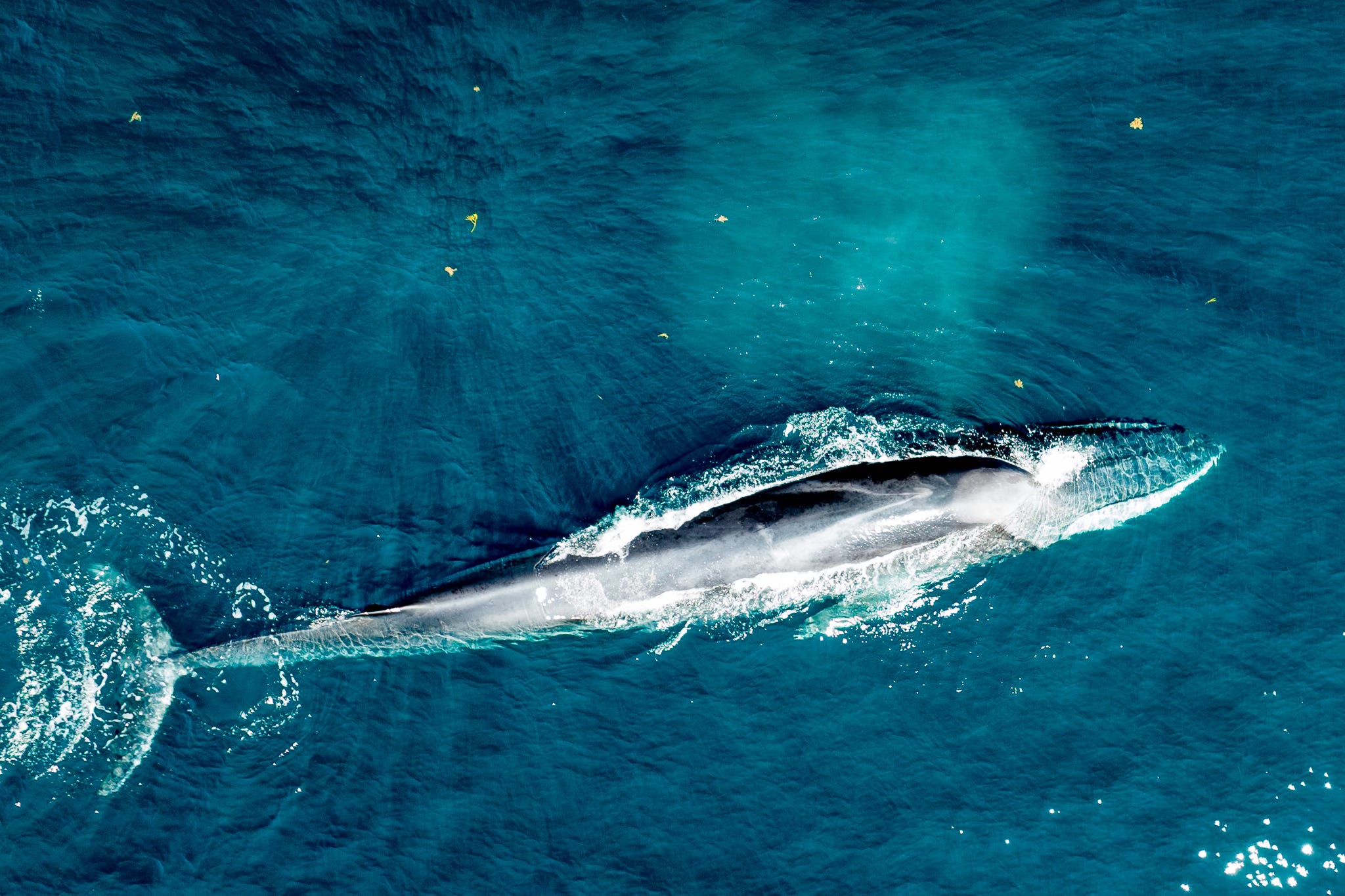
The sound data gathered by the Mediterranean researchers suggests that fin whales alter their “voices” in order to be heard over the din of ships, either raising or lowering their vocal frequency. Such alteration requires more energy than the whales normally expend when communicating. Think of the way you need to raise your voice to be heard at a loud restaurant when dining with friends. Like all wild animals, energy expenditure is a key contributor to an individual’s survival rate. Animals are expert at conserving energy. Whether we’re talking about a lion snoozing in the shade of an Umbrella Thorn Acacia in Serengeti National Park or a yellow lab snoozing in the sun, we know that animals know how to conserve energy.
Just how severely whales are affected by anthropogenic noise is not yet known. But as a result of this research we now know that whales are negatively impacted by the noises humans make. Can ship noise be used as an analogy for the sonic blasting used in windfarm development? With the proviso that no current research shows such correlation, wind mills generate sound both during development and operation at a frequency range similar to that used by baleen whales. Pile driving is the loudest phase of wind mill construction. I’ve personally heard the tinny hammering-in of a wind mill’s steel piling foundation and, anecdotally, it’s during those times that all marine life seems scarce. Even during operation, a rotating wind turbine generates significant low frequency noise, with decibel levels increasing along with RPMs. The impact of windfarm noise on whales is one of those things I know but, for now at least, can’t prove.