

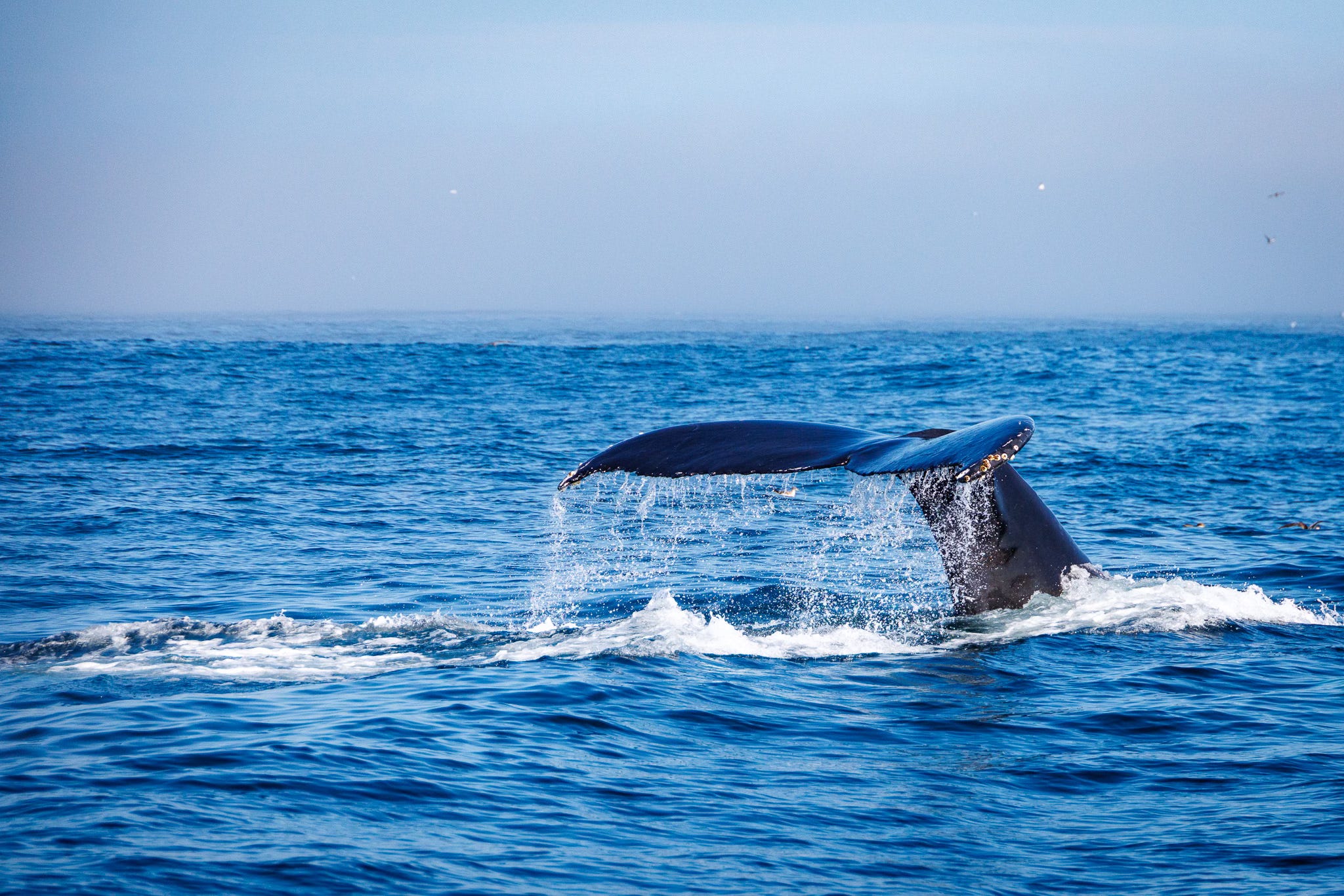
Seeing a whale in the ocean thrills me every time. Over the last five years, I’ve been lucky enough to see countless whales while fishing for tuna offshore and even just going to the beach. The balletic grace of a fifty-foot mature humpback evokes awe. Their outsized pectoral fins give them an alacrity no other whale species possesses. And they seem to like showing off, which, as a human, makes them relatable. Watching a humpback performing complex bubble net feeding or flipping its tale languidly when it dives one can’t help but cheer out loud. One can’t help but care.
So I've been focused on how the appearance of windmills in our area may be affecting whales. The number of whales washing up dead on east coast beaches has increased at the same time windfarm installation has scaled up offshore of my home in Montauk, NY. In 2023 and 2024, humpback whale deaths off the eastern seaboard spiked to 40 and 32, respectively. This time period coincides with increased wind farm development in our area, including Vineyard Wind 1 and the Southfork Wind Farm. The question is whether there’s any evidence that such development caused whale mortality or is it simply a coincidence?
Marine mammals are significantly affected by loud noise. Whales and dolphins use sound to communicate and navigate. Sound pollution from human activity interferes with these critical functions. Think of how a loud restaurant or concert interferes with your conversation. We have research to prove that anthropogenic noise affects whales. A study released in February of this year showed that finback whale communication decreased by up to 70% when the whales were exposed to airgun “shooting” used to survey potential oil drilling sites. Windmill surveying does not use this method, however, relying instead on sonar technology similar to sonar used by fishing vessels.
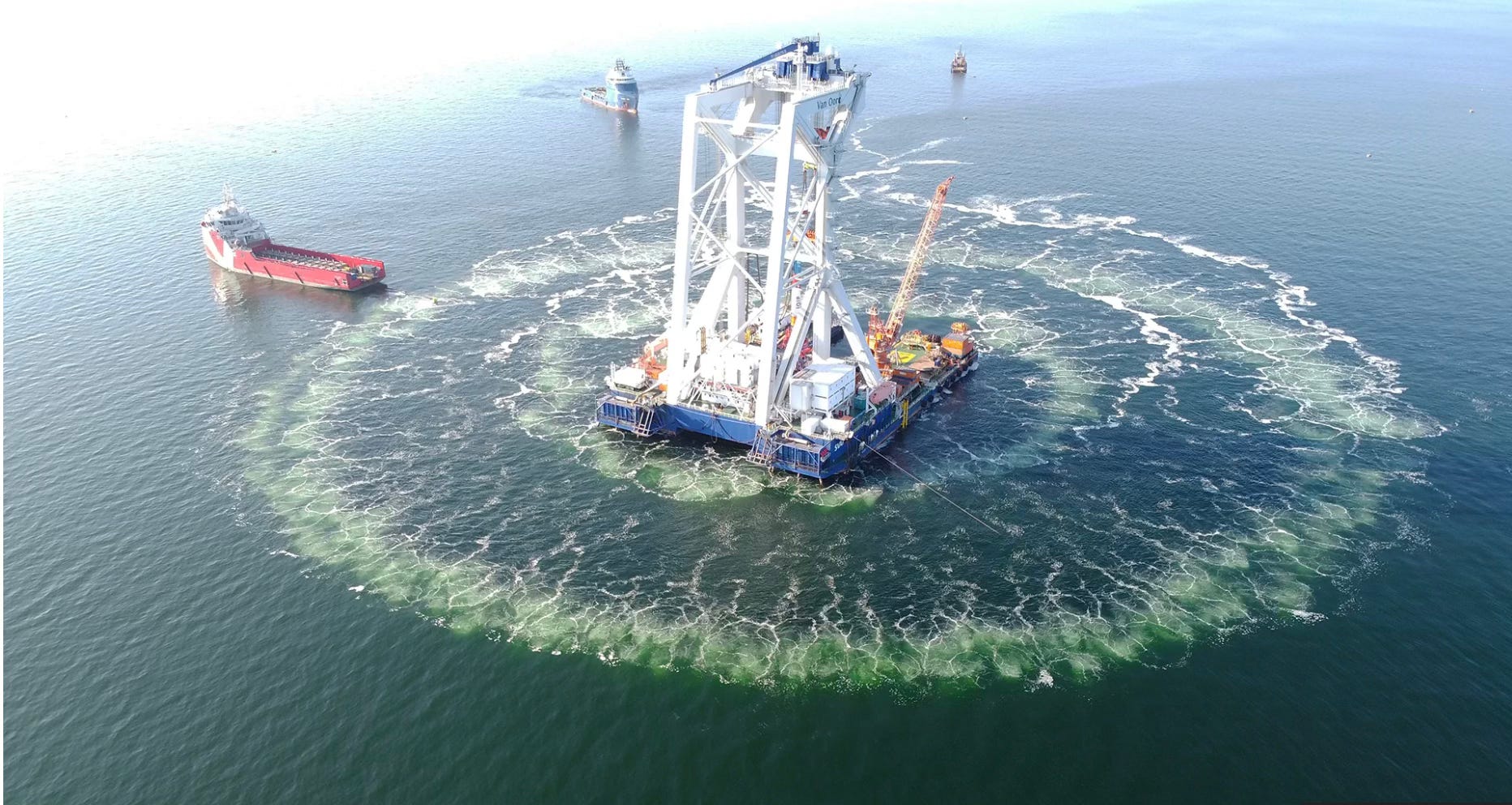
Driving the monopiles that form the foundation of windmills is the loudest part of windmill development. The pile-driving stage for the Southfork Wind Farm and Vineyard Wind 1 took place during the critical time period when whale deaths spiked, 2023-2024. Coincidence still may be the answer, however. Both wind farms deployed noise dampening bubble curtains that muffled decibel levels by up to 90%. At those reduced levels, the noise should have had little affect on whales. Are there other ways a wind farm can have a negative impact on marine mammals?
Baleen whales like humpback whales, finback whales, minke whales and critically endangered northern right whales all feed on small animals called copepods. Copepods feed on phytoplankton and phytoplankton mixes into the water column via currents and wind. A windmill will steal some of the force that would otherwise go towards making phytoplankton more accessible to copepods. Less copepods for whales means the whales need to expend energy looking elsewhere for a meal. But windmill foundations also generate turbulence capable of mixing the water and thus distributing phytoplankton.
My unsatisfying conclusion is that we don’t have a clear answer. For every negative effect of windmill construction, there’s a positive counter. Necropsies are performed on each dead whale that washes ashore. The results of every one of these necropsies indicate that whales die primarily as a result of vessel strikes or fishing gear entanglement. Could anthropogenic noise lead to whales being confused to the point that they are less able to avoid boats and fishing gear? Yes. Could altered phytoplankton concentration force whales into areas where vessels and fishing gear are prevalent? Yes. Could it all be chalked up to coincidence? Again, yes.
If you’re interested in finding out more, follow me here and on Instagram @montaukair where I will share more information as it becomes available.
Ocean Nibbles
☠️ The U.S. used 2 million tires in the to create an artificial reef in the ‘70s. Cleaning up the resulting environmental disaster is about 25% complete and current estimates don’t show 50% completion until 2033!
🐳 Sperm whales release air bubbles to maintain neutral buoyancy while “sleeping.” Sperm whales are the only whale species that rest by floating vertically heads up in the ocean. Scientists discovered that the whales release air gradually in order to avoid floating to the surface.
🦞 Millions of lobster pots littering the Maine seafloor are being removed by divers. Buzz Scott of nonprofit OceansWide is leading an effort to remove millions of lost lobster pots that pollute the Maine seafloor and interfere with lobster fishing.
SOS Wish List
Tin Can Coast: A History of Industry, Greed, and Fishing in the Golden State
Author: Joseph Ogilvy
Price: $12.65 on Amazon
The Northern California coast dominated the abalone, sardine and tuna fisheries for centuries. The decline of “cannery row” is described in exquisite detail by Ogilvy in this fascinating tale of how things fall apart.
Montauk Fishing Report
Summer fishing is in full swing with keeper fluke and seabass being caught by party boats and recreational fisherman just off the point. The Lazybones reported 11 keeper fluke on Thursday morning’s trip. Offshore, the bluefin tuna bite remains strong as does the whale show. Yellowfin tuna are beginning to move closer, with higher concentrations still in areas further west like Coimbra and offshore in the canyons.