

Requiem for a Humpback Whale
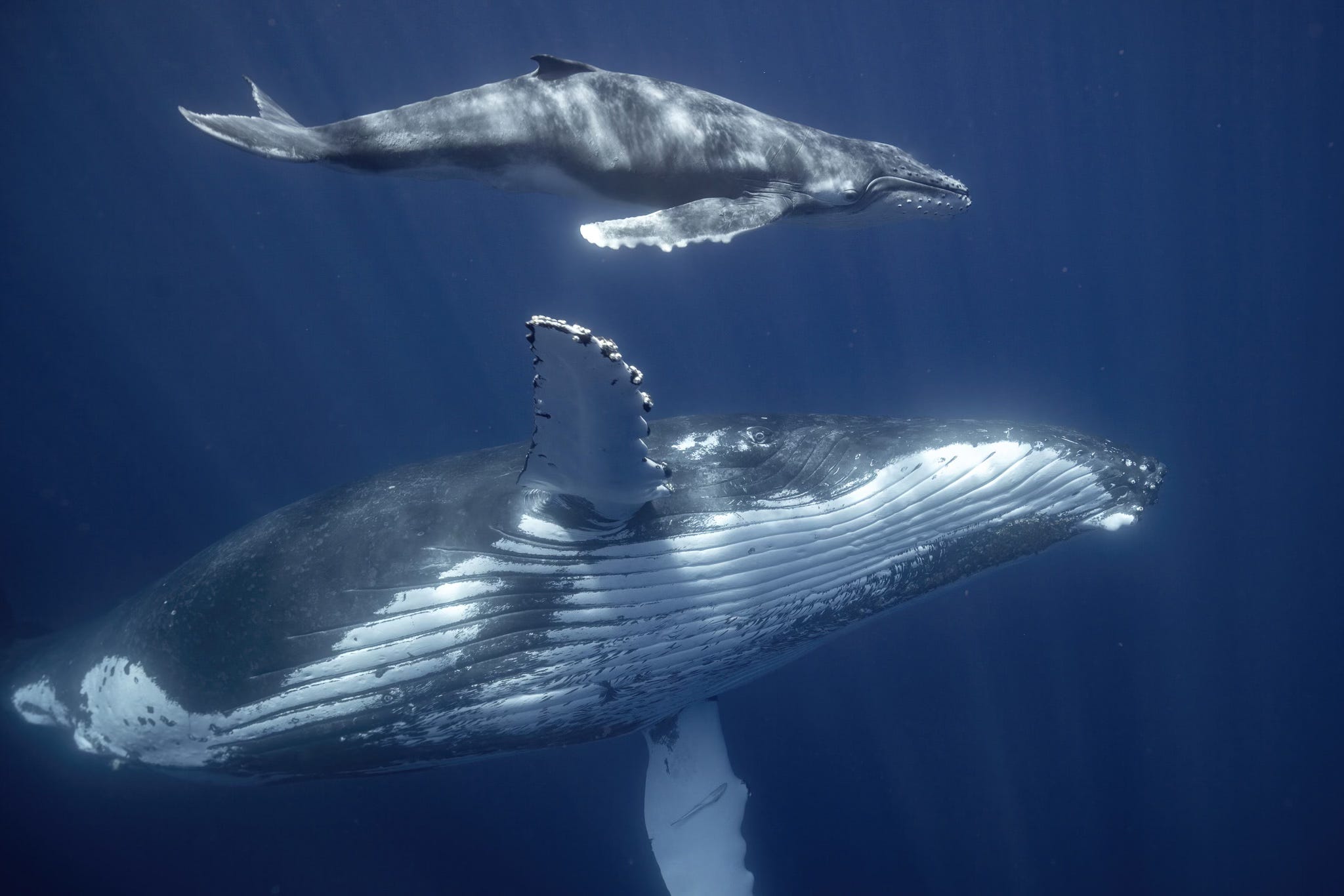
I’ve spent a lot of time around humpback whales. From a distance, mostly. Like everyone in Montauk I’ve awed at the juveniles who lunge feed along our beaches all summer. Some days, they’re so close that an onshore wind carries their briny breath to our noses. I’ve also been much closer to humpbacks at times. A couple of years ago, my wife and I went to Vava’u, Tonga to swim with mothers and calves. In the weeks preceding the trip, I organized my camera gear and underwater housing, planning out shots that I wanted to capture. This was an opportunity to grab once in a lifetime images of humpbacks, I thought. What I didn’t know was that looking into the eye of a 60 foot whale is nothing short of spiritual. The curiosity and recognition I discovered when swimming mere feet from these gentle giants left an indelible mark on my soul. Getting home after that trip, I had a new connection to humpbacks. Unlike most people in Montauk I use a drone to film the whales as they swim along our beaches. Looking through the monitor, my perspective is much more intimate than a lot of people get to experience. I feel fully present to a whale’s movements, able to anticipate where it will surface next and when it will dive. Filming a humpback is something I never take for granted. After dozens of encounters over the last six years of flying drones, I never take for granted the privilege of seeing them up close at a distance.
At 5:30 a.m. on Friday, June 26th, I walked out of the door of our trailer home that sits a mere hundred yards from the high tide line and was immediately struck by the smell of decaying whale. At the time, I didn’t realize that’s what I was smelling. Instead I thought I was smelling the massive schools of sand eels I’ve been seeing a quarter mile from shore for the past few weeks. As a fisherman who often uses sand eels for fluke bait, it’s a smell I’m familiar with. Our minds tend to cling to the familiar to protect us from the incomprehensible.
I went back inside to grab my drone, thinking I was about to witness a massive feed by the usual suspects this time of year: striped bass, bluefish, terns, cormorants and gulls. Walking out to the deck that hovers above the breakers, I powered on the drone and controller and was airborne within minutes. Ascending to 200 feet, I scanned the ocean through the controller’s monitor. There was some activity on the surface nearby and I sent the drone in that direction without even looking down at the shore where the source of the smell was lolling in the gentle waves of the breathlessly calm dawn. A big splash. Could it be I had spotted my first humpback of the season?! As the drone got closer, I was thrilled to see the bright white pectoral fins just under the surface. The filter of ocean water tinges the white fins a fluorescent aqua. My eyes are riveted to the monitor screen planning my approach angle for the perfect cinematic capture of a feeding humpback. The whale was swimming through dense schools of sand eels. Their reddish hue distinguishes sand eels from other prey fish. These schools were massive bait balls, strung together for miles like a giant beaded necklace encircling the Montauk peninsula.
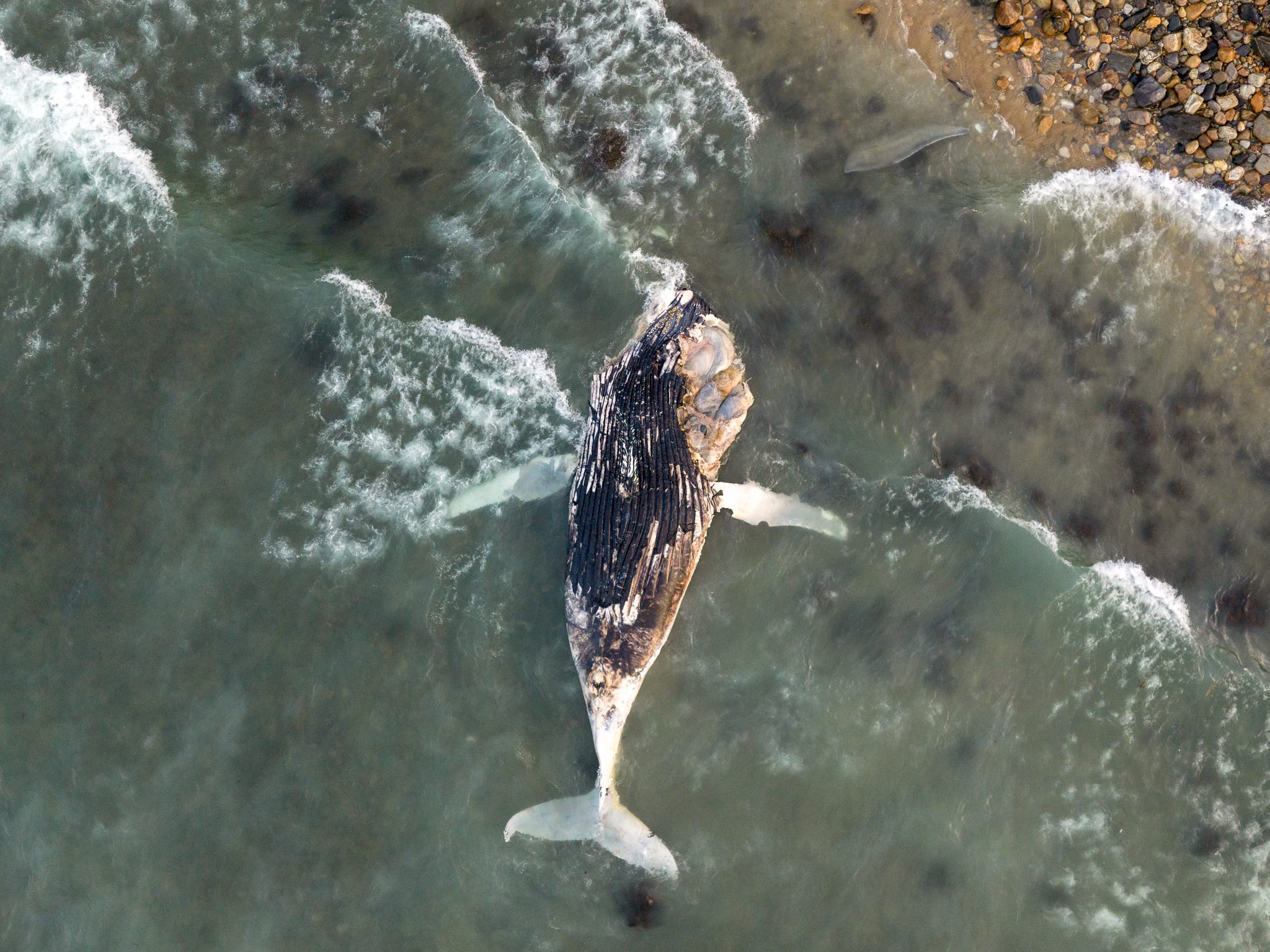
For about 30 minutes, I filmed this juvenile (see video above) traveling between sand eels clusters. Its lunges were the clumsy surface breaches of a freshly weaned juvenile learning to feed itself. I giggled to myself at the adorableness. What a cutie, I thought. Predicting when and where the whale would lunge is more an art than a science and I was variably successful at it. When the battery level of the drone dwindled to 30%, I turned the drone towards its homepoint a/k/a my perch on the wood bench of one of the trailer park decks overlooking the ocean. Through the monitor, I spotted the true source of the pungent fishiness. A 40-foot humpback whale corpse was heaved upon the rocks of the revetment that protects our home by the sea from that sea’s awesome kinetic prowess. My heart stopped in empathy for her.
After calling the NOAA marine mammal hotline, I learned that I wasn’t the first to see her. Her body had been spotted the night before about seven miles south of Montauk and was predicted to wash ashore on Block Island. From the huge semicircular bite marks on her pectoral fins and head, great white sharks had also been aware of her. But what had caused her demise? We know that boat strikes and entanglement in commercial fishing gear are the primary dangers for whales. Humans were the most likely culprit. After another day of waiting, the Town of East Hampton used an outsized Caterpillar excavator to move the whale’s corpse to the beach in front of “dirt lot” so that scientists from the Atlantic Marine Conservation Society could perform a necropsy. My wife and I walked over with our two golden retrievers, Norman and George, to witness the scientists gathering samples. The image was familiar. They were using blades mounted on long wooden poles to slice off large portions of blubber. I’d seen this before. Whalers used the same implements to remove blubber before rendering it into oil. Only now, these instruments of an outlawed occupation were being used to learn more about a species we are trying to protect. It was haunting to see, while also hopeful. Some day we will learn better ways to prevent the premature deaths of our marine cousins. Can we make fishing gear safer for them? Can we develop simple warning systems that can be installed on boats? Seeing the dozen or so scientists on the beach that day gave me hope. Smart people are working to save the whales from extinction. Future generations will inherit a Planet Ocean with more whales.