

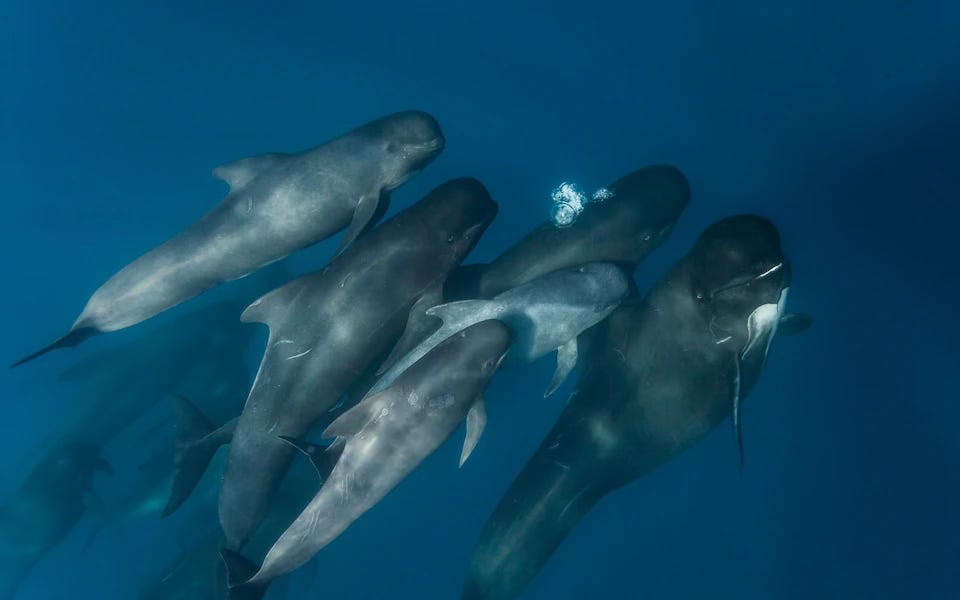
How Pilot Whales Deal with Ship Noise
Can you hear me now? Just like the guy in the Verizon ads, Pilot Whales in the Gibraltar Strait are having signal issues. A recent study found that the whales are forced to “shout”to be heard over ship noise at levels equivalent to a loud vacuum cleaner. Just think back to your suburban youth… Come on, Mom, I’m trying to watch the WWE Smack Down! How annoying was that? For Pilot Whales, hearing each other is a matter of survival. And they’re already yelling as loud as they can. They only need to increase their volume a little for their high frequency calls. But to make low-frequency and two-component calls, the whales are already using full volume. Getting louder to compensate for ship noise isn’t an option. Other studies have found that other whale species are also affected. Orcas and blue whales are forced to raise their voices to deal with noises humans make. Maybe let’s find a way to turn down the volume just a tad so our whale friends can speak. When ship traffic dipped as a result of the 9/11 terrorist attack on the Twin Towers, the nearby population of critically endangered Northern Right Whales had dramatically reduced stress levels. If we lower our volume, the whales relax. A relaxed whale is a chatty whale. Just imagine the tales they could tell.
You Dropped a Bomb on Me, Baby 🎶
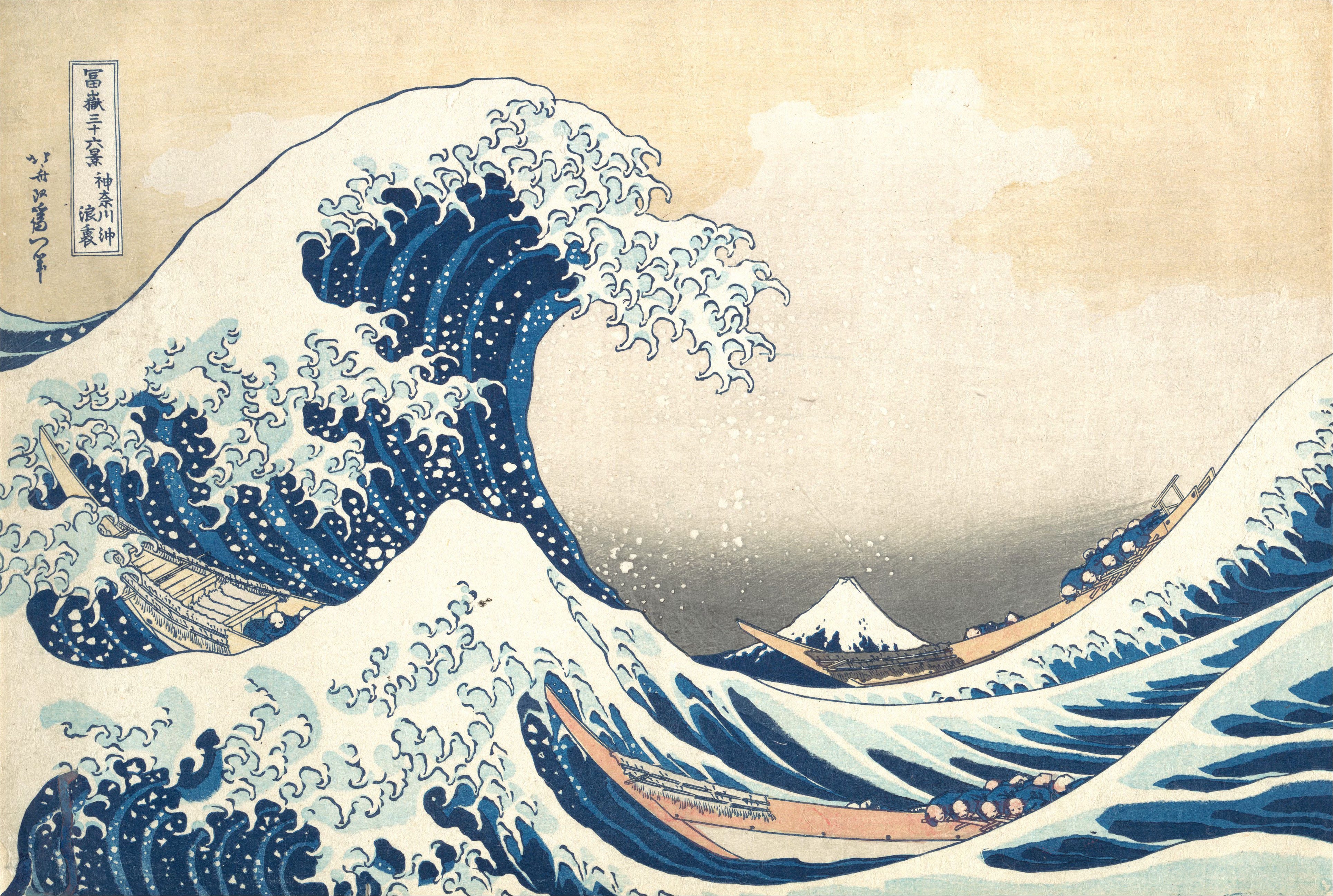
There are tsunamis and then there are megatsunamis. A 2025 event in the Tracy Arm fjord in southeast Alaska qualified as the latter. When a massive rockslide dropped a volume of stone 24 times larger than the great pyramid of Giza into the ocean, a 1,578-foot wave erupted onto the opposite coast of the fjord. The megatsunami was witnessed by passengers on a National Geographic Venture ship and a group of kayakers camping on a nearby island. Luckily, the ship was located just outside the fjord at the time. Had the ship been inside the fjord, the wave would have been “unsurvivable.” According to scientists, we have more megatsunamis to look forward to. Global warming will cause more massive rockslides and glacial calving capable of producing waves equal to or greater than the 2025 Alaska event. Maybe even greater than the Lityuya Bay, Alaska megatsunami that measured 1,720 feet!
Bubble Net Feeding
Humpback whales are mathematical wizards. One of the ways humpbacks capture prey like menhaden/bunker is by using a “bubble net” technique (see my drone video above shot off of Montauk) whereby one of more whales gets underneath a school of baitfish and blows bubbles in a reducing radius spiral that conforms to a fibonacci sequence. In mathematics, a fibonacci sequence is a series of numbers where each number is the sum of the two preceding numbers (0,1,1,2,3,5,8, etc.). By blowing bubbles in this spiraling pattern, the whales create a “net” that concentrates the fish into a tight group at the center of the spiral. To capture their meal after forming this net, the whales simply open their mouths and lunge at the surface. The genius of nature astounds again... What’s more, the bubble netting whales pass along this effective feeding technique to other members of the pod. Younger whales learn this behavior through observation. The Spiralizer has nothing on humpbacks!
Ocean Nibbles
🌊 Florida Goes Rogue. Last week beachgoers in Fort De Soto, Florida watched as their beer-filled coolers floated away atop a 28-foot rogue wave that crashed into the Gulf of Mexico coast. While at the beach this season, apply sunscreen often and keep an eye towards the ocean. Stay vigilant, my friends.
🎣 A Fisherman’s Tale. Check out the record catches displayed in a recent article by Outdoor Life magazine. Among the highlights are a 1,496 lb. bluefin tuna caught in 1979 in Nova Scotia and a 2,664 lb. great white shark caught in 1959 off of the southern coast of Australia.
🐳 Humpback Comeback. In the 1960s, the global humpback whale population was around 10,000 individuals. Today, it’s estimated to be 80,000. Scientists attribute the species’ triumphant return to two things: commercial whaling bans and a humpback whale’s ability to pivot to different types of prey.
SOS Wish List
Jim Smith 72
Shoot for the moon. Even if you miss, you’ll land among the stars. Right? Envelopeus, a new custom sportfish built by Jim Smith Boatworks, sails among stars, which is why it makes the SOS Wish List this week. Twin MAN V12Z-2200s push 98,000 lbs. along at up to 45 knots! But with all the amenities of this floating mansion, what’s the rush?