

You wanna get deep, man?
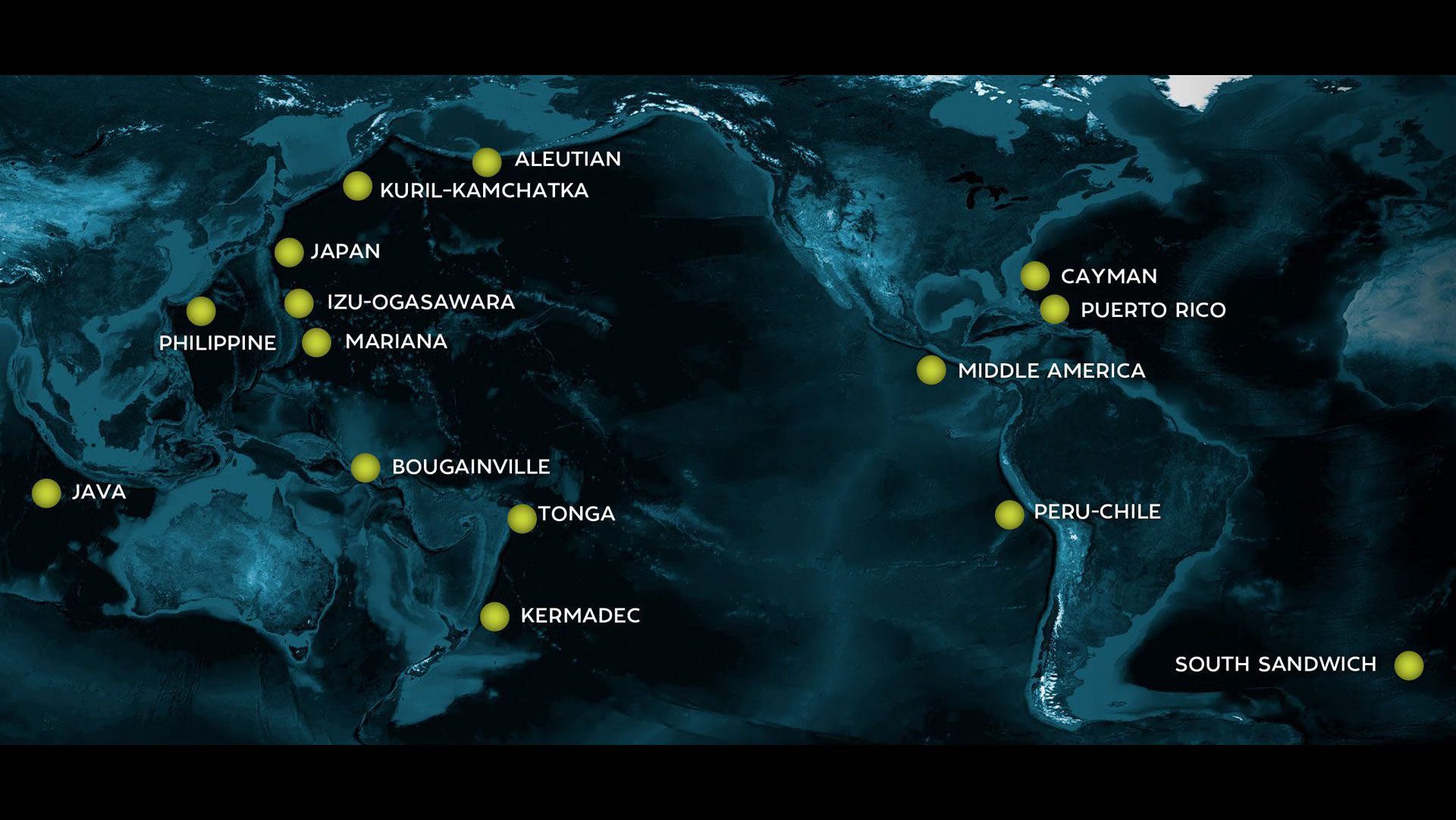
I’m not talking about philosophy, but maybe I am. After all, Nietzsche once said if you stare too long into the abyss, the abyss stares back at you. Well, my friends, buckle up because this week we’re going deeper than the abyss. We’re going to Hades, the mythical place that Homer’s Odyssey describes as beyond the gates of the sun, just past the land of dreams. You might ask, “What the heck does Greek Mythology have to do with the Ocean?” To which I’d reply, touché. It has everything to do with the Ocean. The deep, deep, deep Ocean. The hadal zone (hadalpelagic zone if you’re fancy) is located at 6,000-11,000 meters, just below the abyss (or abyssal zone). It’s named after Hades, the Ancient Greek underworld populated by gods and monsters. There are 47 known hadal zones in Planet Ocean. Best known among them is the Mariana Trench in the Pacific Ocean southeast of Japan. The deepest part of the Mariana Trench is Challenger Deep. I told you we were getting deep this week… Challenger Deep is named after the H.M.S. Challenger, the ship that first plumbed the Mariana Trench in 1875. The creatures dwelling in the hadal zone are ghostly, transparent, large-eyed, bony. Even old Homer couldn’t have imagined such creatures. As scientists discover more about the deep Ocean, we will find ourselves staring into the abyss. Will it stare back?

Got Microplastic Breath? Don’t Blame the Ocean.
A recent study found that the vast majority of airborne microplastics enter the atmosphere from land, not the ocean. Land is responsible for over 20 times more microplastic particles than the ocean. Once airborne, the atmosphere carries these particles to the furthest reaches of the Earth. We all have microplastic breath. It’s concerning, but the same study found that the volume of airborne microplastics has been “dramatically overestimated.” Still, inhaling plastic-laden air can’t be good for us. And, although researchers are working on learning more, the effects on our health is still uncertain. although researchers are working on learning more. Once inhaled, microplastic particles can affect us in myriad ways. Observational studies have found that inhaled microplastic causes inflammatory responses. Particles can even penetrate the walls of our respiratory system, winding up in our blood and organs. For sea-dwellers, exposure to microplastics is also perilous. Microplastics decrease photosynthesis and growth in microalgae, depress the feeding activity of zooplankton, accumulate in the gills, stomach and hepatopancreas of crabs and alter the histology and biomarkers of fish. Stay tuned for more information on just how airborne plastic affects us. For now, join me in a collective (plastic) sigh of relief. There’s less plastic in the air than previously thought.
Save the Coral
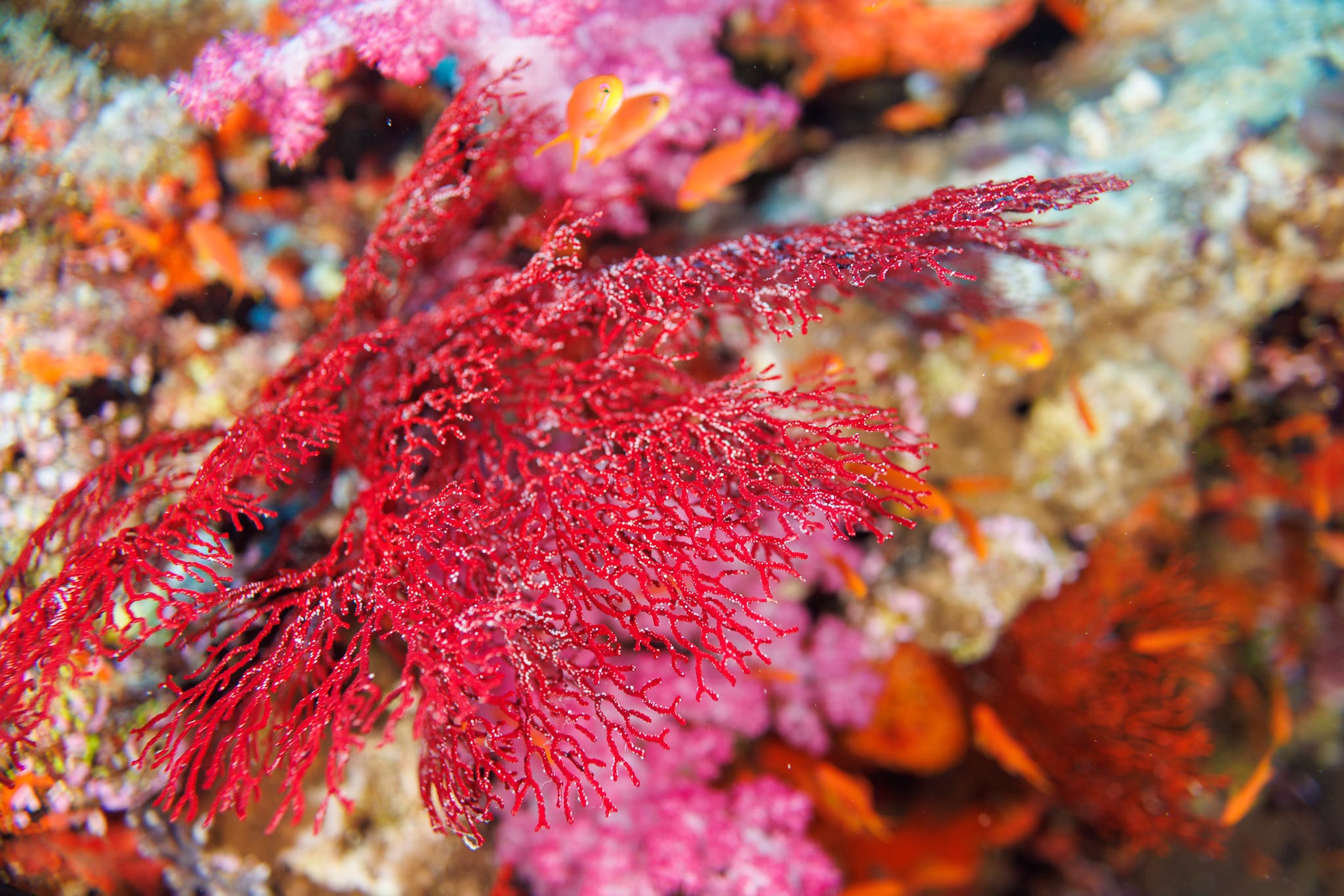
Often referred to as the rainforests of the sea due to their Amazonian contribution to marine biodiversity, coral reefs need our help. In the last 75 years, worldwide coral reef coverage has decreased by 50%(!) due to the effects of overfishing, pollution, habitat destruction, and climate change. Since humans are the reason that coral reefs have been dying off for decades, the responsibility of restoring them rests on us. Make sense? The good news is that humans have been trying to clean up their mess for decades. Beginning in the 1970s, we began restoring reefs by adding coral-friendly habitat and transplanting baby corals from nurseries in a lab. The not so good news is that transplanted coral survives at a piddling rate of 12%. But before we raise a white flag, let’s take a look at some exciting research by scientists at the University of Miami. An interdisciplinary team focuses on improving survival rates of transplanted coral has discovered that raising the alkalinity/decreasing the acidity of the water surrounding transplanted baby corals increases their survival rate to 52%, a roughly 400% increase. This astounding improvement was achieved by seeding the coral onto cement tiles that contain sodium carbonate. A simple, accessible technique that produces heroic results. Having dove in areas where living coral is almost nonexistent (Florida) and areas where the coral is psychedelically alive (Fiji, Raja Ampat, Bonaire), I was heartened to hear that there’s new hope for coral restoration success. If you’re reading this post, you probably feel the same. Hi, friend 👯
Ocean Nibbles
Federal Support for Fisherman. The USDA has long supported traditional farmers by offering low-interest loans, subsidies, crop insurance and disaster assistance. A brand new Office of Seafood will extend USDA benefits to support fisherman 👏
POTUS Whiffs on Wind. When the Trump administration tried to stop construction on five offshore wind farms in December, a federal court shot them down. Last month, the government missed the deadline to challenge the rulings. Up to 2 million homes will soon be electrified by wind 💨
Antarctic Hot Springs. A Korean research team recently discovered hydrothermal vents on the seafloor 1,300 meters beneath Antarctica. Previously unobserved, these “hot springs” pump out 300 degree water like it’s their job. Hot water meets cold. Quite the yin-yang, don’t you think? ☯️
SOS Wish List
Sig Sauer ZULU6 HDX PRO MARINE Binoculars, 18 x 50
$2,099.99
Holding binoculars steady while on a boat is an art, not a science. These stabilized marine binoculars from Sig Sauer solve that problem while looking cool. All expensive tech needs to look cool. Buy your new favorite optic aid at Sig Sauer, Amazon or B&H.