

Scientists Observe Sperm Whales Headbutting Each Other
For the first time, scientists have observed young sperm whales ramming their business ends against the bodies of other sperm whales. While we’ve had anecdotal evidence of such intra-species violence for centuries, official confirmation has been elusive. Beginning with the 1820 sinking of the whaling vessel Essex by an aggressive sperm whale, these massive blunt-headed whales have struck fear in the heart of sailors. When Moby Dick (loosely based on the story of the Essex) dropped in 1851, sperm whales were crowned the bony-headed demons of the sea. Yet, despite the perceived danger, whalers continued to target sperm whales for their superior oil and spermaceti until 1986 when the International Whaling Convention banned whaling globally. Check out the video that shows drone footage taken in three different spots in the eastern Atlantic Ocean and the Mediterranean Sea near Mallorca. Scientist are not sure why the whales do this. Could it be rough play? A way for rebellious males to transition from living with their mothers to a solitary life in the sea?
Mining the Deep Sea (for New Species)
In past posts, I’ve mentioned that we know more about the surface of the moon than the ocean floor. Can you imagine discovering 1,000 heretofore unknown creatures living on this planet? The Sustainable Seabed Knowledge Initiative (SSKI) is a project with that mind-blowing goal. Launched at 2022’s UN Ocean Conference by the International Seabed Authority (ISA), the SSKI aims to gain better understanding of the potential harm that would result from mining the seafloor by mapping the location and population of life. Some of the species we know, many we don’t. The ISA is now accepting proposals from explorers willing to plumb the depths in search of 1,000 new species. Pro tip: bring a flashlight.
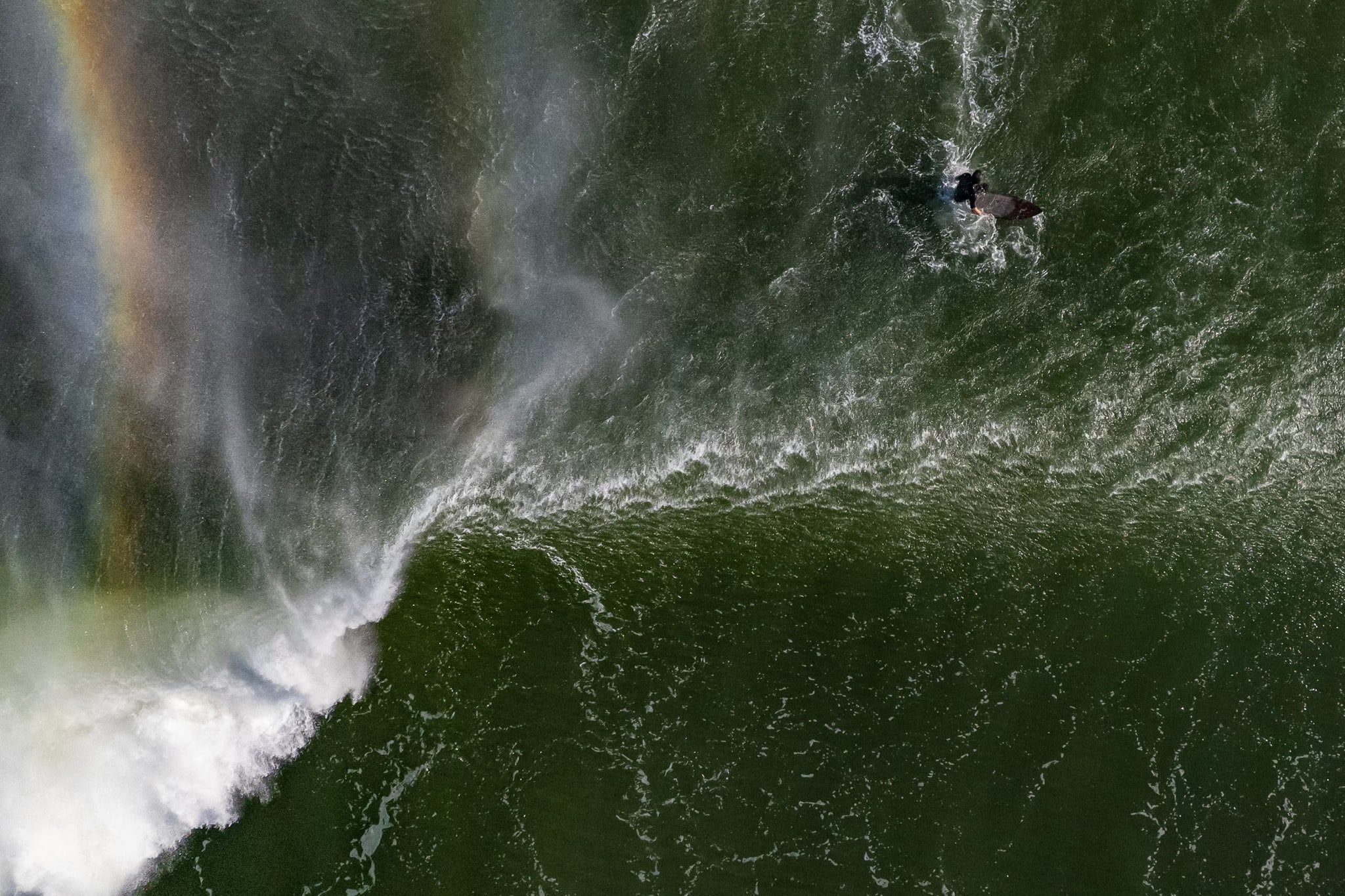
200 Foot Wave? Eddie Would Go
Garret McNamara better get ready for the sequel to his hit HBO series. According to a study published by the Proceedings of the National Academy of Sciences (PNAS), satellites mapping the height of the ocean from outerspace land are registering waves at least as high as 115 feet. A 2024 storm in the Pacific Ocean generated that “rogue” wave and sent many more marching towards the entire western seaboard of North and South America. Using satellite data to analyze ocean heights has helped dispel a theory that wave height was distributed according to a bell curve. That theory left no room for the observations relayed by sailors of rogue waves over 100 feet high that seemed to come from nowhere. Thanks to satellites, we now have confirmation that mega waves do not necessarily require mega storms.
Ocean Nibbles
Raise your hand if you want to fish for giant bluefin tuna in Japan. A recent article in Marlin magazine discusses Japan’s respect for one of my favorite animals, the bluefin tuna. I’m one click away from booking a charter boat to fish the Tsugaru Strait. Who’s with me?
North Atlantic right whales were frisky in 2025. Florida’s Fish and Wildlife Conservation Commission has counted 23 right whale calves so far this year. Species preservation isn’t always as boring as it sounds, huh, humans?
How to build a better fish trap. “Bycatch” refers to the tragic accidental netting of non-targeted or illegal species such as turtles, seabirds, dolphins and sharks by commercial fisherman. No one wants this. Especially not the animals killed senselessly. A recent article published by Nature Sustainability found 42 measures that reduced bycatch without reducing the harvest of targeted species.