

No Filter Needed for Humpback Vocalists
Imagine finding an old vinyl record in your grandfather’s collection, popping it onto ye olde turntable and dropping the needle to hear the alien, almost obscene clicks, whistles and groans of an adult male humpback. Your experience would not be far off from how scientists at the Woods Hole Oceanographic Institution in Falmouth, Massachusetts uncovered a historic recording of a humpback whale “singer” while digitizing archived audio records. The 1949 recording, assumed to be the oldest recording of whale song, was originally captured by a group of scientists testing sonar systems near Bermuda. With a then-state-of the-art Gray Autograph dictation machine aboard their research vessel, they captured an unknown cacophony. Intrigued by what they were hearing, the scientists kept the recorder running and practically shh’d everyone on board the vessel to better hear the whale song. The existence of the recordings today is remarkable for a few reasons. First, a humpback’s ability to “sing” was not discovered until 1967 by Roger Payne, who later produced an album called Songs of the Humpback Whale. The 1970 record is credited with raising global awareness of whale sentience and kicking off the Save the Whales movement that culminated with a 10-year moratorium on whaling beginning in 1972. I don’t know about you, but I’m still on a Save the Whales movement… see below. Second, the Gray Autograph dictation machine wrote to plastic discs rather than then-prevalent audio tapes. Plastic discs last for decades, tapes do not. Finally, along with the whale song, the disc contains audio of an underwater environment with far less human-generated noise pollution. This fact results in clearer audio of the whales and may even help marine biologists determine how human activity has altered the singing style of today’s humpbacks.
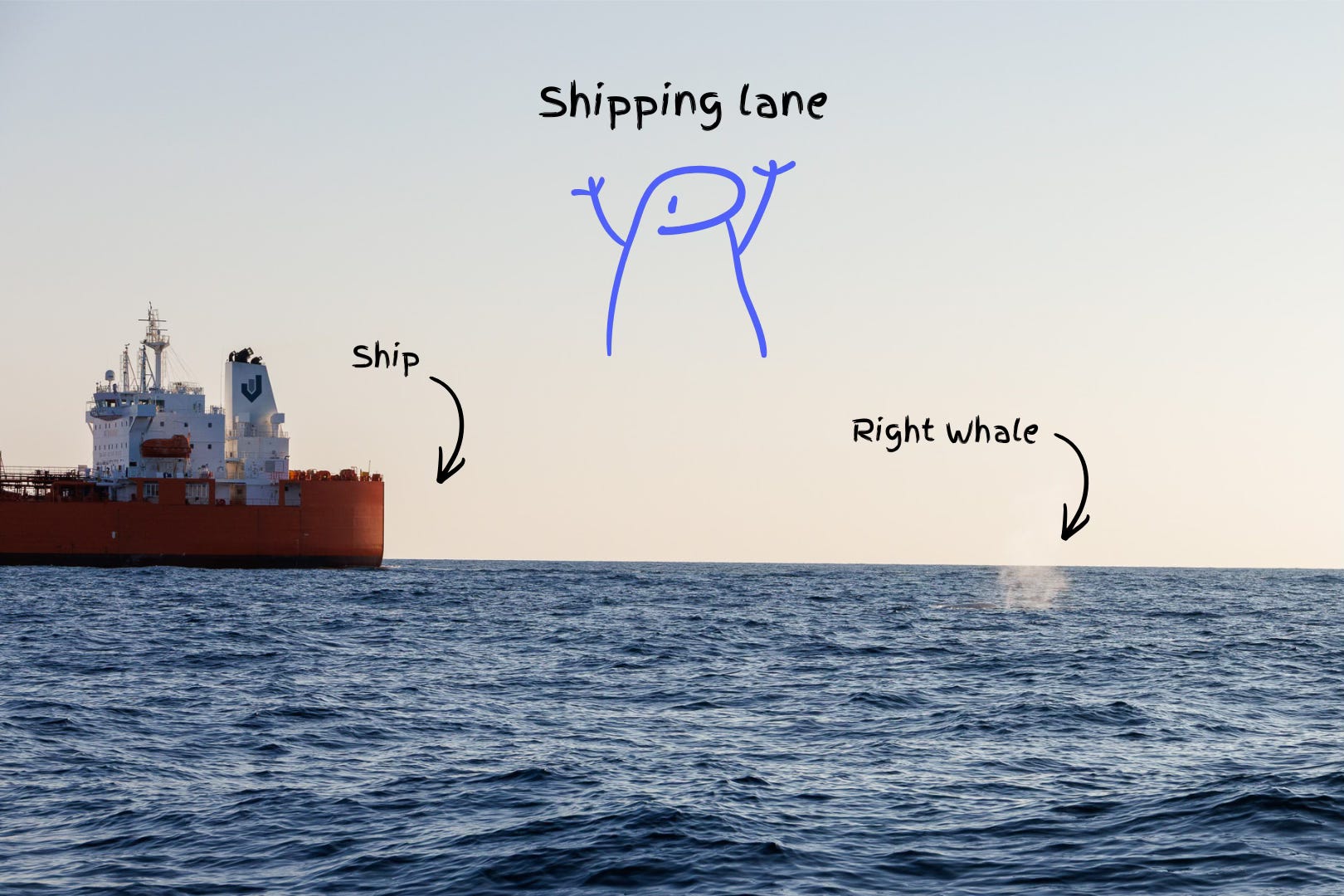
NOAA to Remove Whale Protections? (Alternate title: What the #%$^!?)
As mentioned in last week’s roundup, there are an estimated 384 North Atlantic right whales remaining on Planet Ocean. Now, NOAA is considering whether to do away with speed restrictions in shipping lanes in order to “reduce unnecessary regulatory and economic burdens.” The proposal, open to public comment (email NOAA here) until June 2. NOAA is also asking for ideas from the public for an alternate technological solution that will enable ships to somehow avoid whales and vice versa. So, on one hand, a whale species named by the enlightened whalers of centuries past who donned them the “right” whales to hunt because they tended to stay near shore and loll on the surface, making them an easy target, is finally rebounding thanks to regulations such as ship speed management. On the same hand, ships are saving fuel and $$$ while going slow enough to give whales a chance to dive before getting walloped by a 220,000 ton ocean freight train. And on NOAA’s hand, the Feds are proposing unburdening shipping companies and re-burdening them with presumably costly whale warning devices. I don’t know about you, but I have some thoughts for NOAA. Share in the comments if you feel cute. Might delete.
Dominica Establishes the World’s First Sperm Whale Reserve
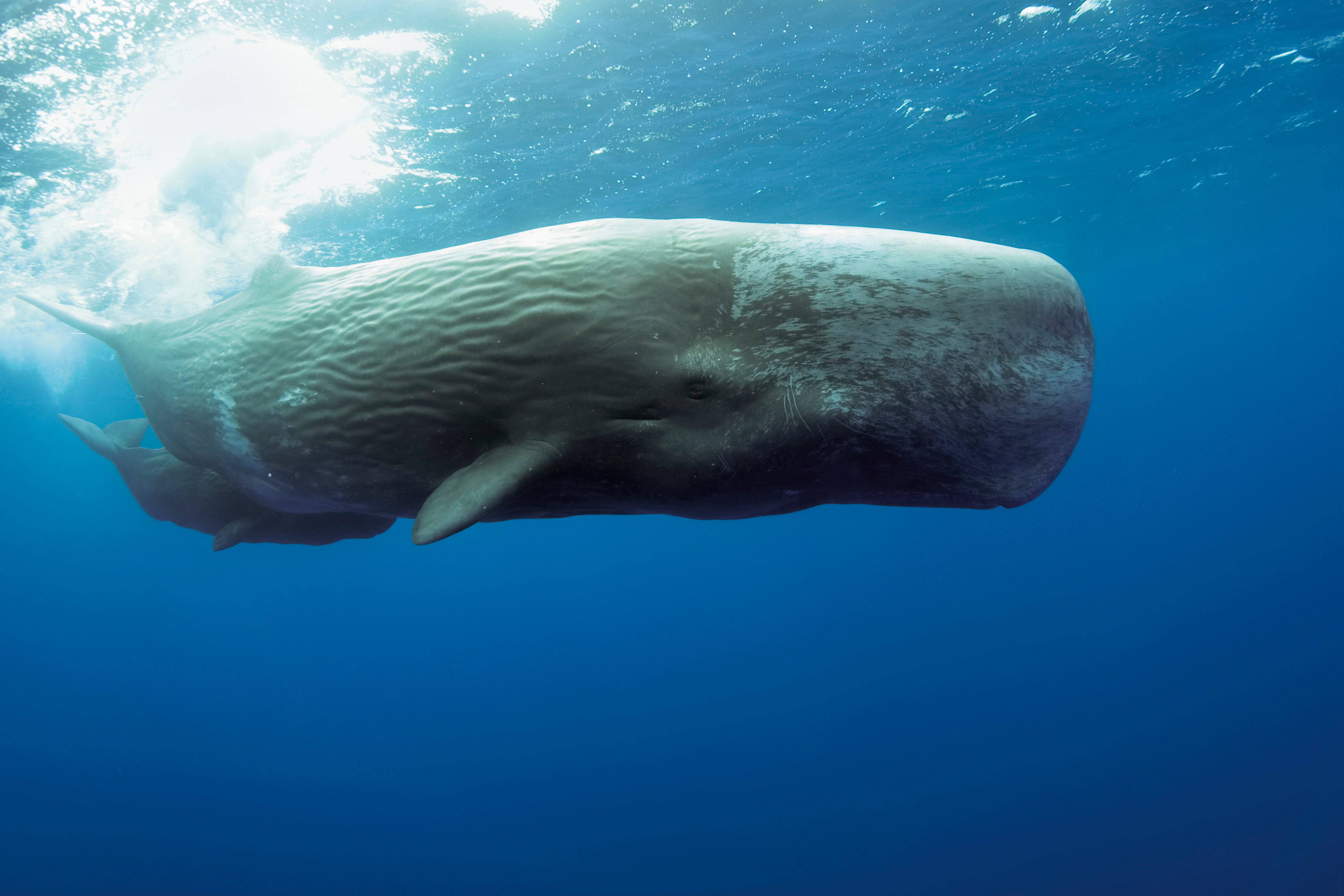
Now for some good news from the whale-iverse... Because despite the seeming abundance of not-so-good news, cetaceans have been thriving in recent years. Beginning with an early ‘70s hit album and subsequent whaling moratorium, the world has rallied to support our marine mammal cousins again and again. Dominica’s parliament recently established a Sperm Whale Reserve spanning ~475 square miles on the island’s western coast, a spot that hosts up to 200 sperm whales each year. The related legislation includes strict penalties for anyone harming or harassing whales within the country’s maritime zones and also establishes a fund whose proceeds “will support conservation, education, enforcement and community engagement initiatives linked to the [Sperm Whale] Reserve.” Whale swims will be limited to licensed operators who are educated in whale behaviors to ensure the safety of the humans and, of course, the sperm whales.
Ocean Nibbles
How do Italians handle an invasive species? On a bed of pasta. Blue Crabs from the east coast of the US have invaded the Italian coast. Having no natural predators in their new home, the crabs are ravaging the local population of eels, clams and mussels. As they say in Sicily, Quando la vita ti dà i granchi, fai gli spaghetti ai granchi.
Don’t fibonacci me! Humpback whales use several different methods to catch their dinner. Bubble-net feeding is my favorite. One or more whales get directly beneath a school of fish and spiral their way upward in a perfect fibonacci spiral, blowing curtains of bubbles that concentrate the fish in the center. Surfacing with mouths agape, the whales can’t miss. I’ve filmed this behavior several times off Montauk, and, yes, my mouth was also agape.
Two adjacent offshore wind farms are open for business. Vineyard Wind, located 15 miles south of Martha’s Vineyard, consists of 62 turbines capable of powering ~400k homes in MA. Revolution Wind, located 15 miles south of Narragansett, RI, consists of 65 turbines capable of powering ~350k homes in RI and CT. Are they ugly? Yes. Do they ruin the pristine horizon we used to cherish? Yes. Is it worth it? I hope so.